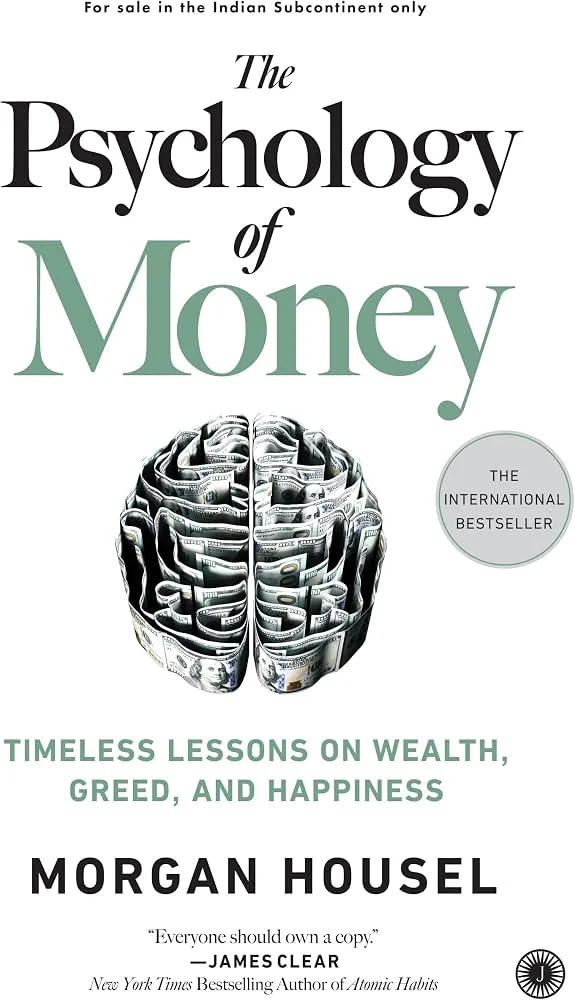
The Psychology of Money
by Morgan Housel
Conversational, warm, anecdotal, accessible, gently contrarian
A real, unedited Premium analysis of a published book, produced by the same engine that reads your manuscript. Shown to demonstrate ProofIntelligence — it is not an endorsement by, or affiliated with, the author or publisher.
A collection of 20 short lessons arguing that financial success depends less on intelligence or technical knowledge and more on behavior, patience, humility, and understanding the psychology behind how we think about money.
Executive Summary
The Psychology of Money is a 20-chapter essay collection arguing that financial success is driven more by behavior and psychology than by intelligence or technical knowledge. Each chapter tackles a distinct theme—luck, compounding, freedom, enough, pessimism, room for error—using vivid historical anecdotes and research to illustrate its point. The book's best quality is its ability to make complex behavioral finance concepts feel intuitive and personally relevant through storytelling. A postscript provides a sweeping economic history of the American consumer from 1945 to the present, grounding the psychological lessons in structural context.
This book presents 20 standalone chapters, each exploring a different psychological dimension of how people relate to money. Rather than offering formulas or technical investment advice, it argues that financial outcomes are driven primarily by behavior—patience, humility, fear, greed, and the stories we tell ourselves. Drawing on historical anecdotes (from Ronald Read the janitor-philanthropist to Warren Buffett's compounding secret to Jesse Livermore's tragic arc), economic research, and personal reflection, the author builds a case that soft skills matter more than spreadsheets. The book covers luck and risk, the power of compounding, the importance of survival over brilliance, the seduction of pessimism, the danger of social comparison, and the value of freedom and time over material possessions. It concludes with the author's own financial confessions and a postscript tracing the history of the American consumer from 1945 to the present. The writing is clear, the chapters are short, and the tone is that of a wise friend rather than a lecturing expert.
This is a masterfully crafted personal finance book that succeeds by doing something deceptively simple: telling stories about money that change how you think about it. The central premise—that financial success is a behavioral soft skill, not a mathematical hard science—is stated clearly in the introduction and reinforced through 20 short, standalone chapters, each built around a memorable anecdote and a single insight. The writing is warm, clear, and empathetic, with a voice that feels like a thoughtful friend rather than a lecturing expert. The book's greatest strengths are its storytelling (the Ronald Read/Richard Fuscone contrast, the Bill Gates/Kent Evans parallel, the ice age/compounding analogy), its accessible structure (short chapters designed for modern attention spans), and its emotional intelligence (the lottery ticket passage, the author's personal confessions). For the Indian market, the themes of savings discipline, compounding patience, and behavioral humility are deeply resonant with a population experiencing rapid financial inclusion and growing investment participation. The main editorial consideration for an Indian edition would be localization—adding Indian examples and contextualizing U.S.-specific financial instruments. The book is publication-ready with only minor copyediting needed.
Reducing repetition between chapters that cover overlapping ground (especially chapters 4, 5, 13, and 19 on compounding/survival) and adding international examples—particularly from emerging markets like India—would simultaneously tighten the reading experience and broaden the book's global commercial appeal.
This is an exceptionally well-crafted personal finance book that succeeds by reframing money as a psychological challenge rather than a mathematical one. Its greatest strengths are its storytelling, its accessible voice, and its powerful central premise. The short-chapter structure is perfectly suited to modern reading habits. The book delivers on its promise consistently across 20 chapters and a substantial postscript. Its weaknesses are minor: some repetition between chapters, U.S.-centricity that may require adaptation for international markets, and occasional oversimplification. For the Indian publishing market, the themes of savings discipline, compounding patience, and behavioral humility are deeply resonant, though localized examples would strengthen the connection.
Score Breakdown
6 craft and 5 market dimensions, each scored with the evidence behind it.
The 20-chapter structure works well as a collection of standalone essays unified by theme. Each chapter builds on a clear premise stated upfront (e.g., page 46: 'Our minds are not built to handle such absurdities'). The chapters are logically sequenced—luck/risk early, then compounding, then survival, then behavioral traps, then synthesis in chapter 19. The postscript (page 188) adds historical depth. However, because chapters are designed to stand alone, there is some repetition (the survival/compounding point recurs across chapters 4, 5, 6, and 13). Tightening cross-references and reducing redundancy between chapters 5 and 13 would raise this score.
The book is rich in evidence: the Malmendier-Nagel research on generational investing (page 19), J.P. Morgan's Russell 3000 distribution data (page 67), Correlation Ventures' VC return data (page 66-67), and the Morningstar tactical fund study (page 138). The postscript (pages 188-204) is a substantive economic history. The Buffett/Simons compounding comparison (page 50) is genuinely illuminating. The one change that would raise this score: deeper engagement with counterarguments—for instance, acknowledging that behavioral patience alone doesn't help those without capital to invest.
The voice is exceptionally clear, warm, and confident without being preachy. The opening anecdote about the tech executive throwing gold coins (page 9-10) immediately establishes a storytelling register. Sentences are short and punchy: 'His skill is investing, but his secret is time' (page 50). The author uses 'I' and 'you' naturally, creating intimacy. The lottery ticket passage (page 23) shows remarkable empathy. The one improvement: occasionally the conversational tone tips into over-simplification, as when complex economic phenomena are reduced to single-sentence morals.
The book is compulsively readable. Each chapter opens with a hook—Bill Gates and Kent Evans (page 28-30), Jesse Livermore's wife greeting him in tears (page 54), the alien circling Earth (page 162). The short chapter format (most under 10 pages) creates constant momentum. The 'Roger' valet story (page 86) and the doctor-friend conversation (page 128) feel personal and real. The one change: the middle chapters (11-14) lose some momentum compared to the electric opening and closing sections.
The promise is stated explicitly on page 10: 'doing well with money has a little to do with how smart you are and a lot to do with how you behave.' This promise is kept consistently across all 20 chapters. Chapter 19 (page 173-178) delivers a clean summary of actionable takeaways. Chapter 20 (page 180-187) shows the author practicing what he preaches. The book never strays from its central thesis. To raise this further: the postscript, while excellent, shifts register from psychology to economic history, which slightly dilutes the promise.
The prose is clean and professional throughout. Endnotes are properly formatted (pages 205-211). However, there are minor issues: some OCR artifacts on the title pages (pages 1-3) with stray characters like 'פון' and '1LDXD'. The table of contents formatting (pages 5-7) is functional but plain. Some chart descriptions (pages 20-21, 25) appear as raw text rather than clean formatting. The word 'forwardlooking' on page 28 should be hyphenated. 'Unchartered' on page 125 should be 'uncharted.' These are minor but present.
The big idea—that financial success is a soft skill driven by behavior, not a hard science driven by intelligence—is immediately graspable and repeatable. The Ronald Read vs. Richard Fuscone contrast (pages 10-12) crystallizes it perfectly: a janitor outperforming a Harvard MBA. The ice age/compounding analogy (pages 47-49) is brilliantly original. 'His skill is investing, but his secret is time' (page 50) is the kind of line readers remember. This is a genuinely powerful premise that reframes how people think about money.
The book explicitly addresses everyone who deals with money—'from Read to Fuscone and everyone in between' (page 12). The lottery ticket passage (page 23) shows awareness of readers across income levels. The author acknowledges on page 15 that 'Most readers don't finish the books they begin' and keeps chapters short accordingly. The personal finance advice in chapters 10, 19, and 20 is clearly aimed at individual investors and savers. The one improvement: the book is somewhat U.S.-centric (401(k)s, S&P 500, American consumer history), which may limit resonance for Indian readers without localization.
This book sits at the intersection of personal finance and behavioral psychology—two of the most commercially robust non-fiction categories. The short-chapter format is ideal for modern readers. The premise is universally relevant. The writing is accessible enough for first-time finance readers but substantive enough for experienced investors. The postscript (pages 188-204) adds depth that elevates it above typical personal finance books. For the Indian market specifically, the themes of savings, compounding, and behavioral discipline resonate strongly. The one risk: heavy U.S. examples may require some mental translation for Indian readers.
The behavioral finance space is crowded (Kahneman, Thaler, Ariely), but this book carves a distinct niche by focusing specifically on money psychology through storytelling rather than academic research. The ice age/compounding analogy (page 47-49) is genuinely novel. The 'Man in the Car Paradox' (page 82-84) and the alien thought experiment (page 162-163) are fresh framings. The Ronald Read story (page 10-11) has been told before but is deployed here with unusual effectiveness. The one change: some chapters (like 'Save Money,' page 90) cover well-trodden ground without adding much new.
The book is compulsively readable. Each chapter opens with a hook—Bill Gates and Kent Evans (page 28-30), Jesse Livermore's wife greeting him in tears (page 54), the alien circling Earth (page 162). The short chapter format (most under 10 pages) creates constant momentum. The 'Roger' valet story (page 86) and the doctor-friend conversation (page 128) feel personal and real. The one change: the middle chapters (11-14) lose some momentum compared to the electric opening and closing sections.
Structure
The introduction and first four chapters establish the book's premise (money is a soft skill), introduce the key themes of experiential bias, luck/risk, the danger of never having enough, and the counterintuitive power of compounding.
Key momentThe Ronald Read vs. Richard Fuscone contrast on pages 10-12, which crystallizes the entire book's argument in two lives.
Exceptionally strong opening. The valet anecdote, the Read/Fuscone contrast, and the ice age/compounding analogy create immediate engagement and establish credibility. The author earns the reader's trust quickly through storytelling rather than credentials.
Chapters 5-14 explore the practical and psychological dimensions of money: survival over brilliance, tail events, freedom as the highest dividend, the paradox of visible wealth, saving, reasonableness over rationality, the limits of historical prediction, room for error, and the reality that people change over time.
Turning pointChapter 7 (Freedom, page 75), where the book shifts from investment theory to life philosophy—arguing that controlling your time is money's greatest gift.
The middle is substantive and varied, though it's where some repetition creeps in (survival/compounding themes recur). The strongest chapters (6, 7, 11, 15) are among the book's best. The weakest (8, 10) cover familiar territory. Overall, the middle sustains engagement through constant variety of anecdote and angle.
Chapters 15-20 and the postscript address the price of investing success, the danger of following others' games, the seduction of pessimism, the power of narrative, a synthesis of all lessons, the author's personal financial confessions, and a sweeping history of the American consumer.
ResolutionChapter 20's personal confessions (page 181-187) and the postscript's economic history (pages 188-204) provide both intimate and structural closure.
The ending is strong and satisfying. Chapter 20's vulnerability—admitting to owning a house without a mortgage despite knowing it's financially suboptimal—is the book's most human moment. The postscript is ambitious and well-executed, giving the psychological lessons a historical foundation. The book ends with earned authority.
Pacing
Pacing is well-calibrated for a non-fiction essay collection. The book front-loads its most energetic, story-driven chapters (1-6) to hook readers, then settles into a rhythm of alternating between high-energy narrative chapters and quieter analytical ones. The middle section (chapters 8-11) is the slowest stretch, which is appropriate as it covers more instructional material. Energy picks up again with the fee/fine reframing and bubble analysis. The postscript provides a satisfying final surge of narrative energy.
Narrative Tension
Story Arc
Peak: Rajat Gupta's fall from Kolkata orphan to McKinsey CEO to convicted insider trader, juxtaposed with Madoff's legitimate-business-turned-Ponzi-scheme, creating the book's most dramatic illustration of 'never enough.'
The tension curve follows a pattern typical of essay collections: peaks at dramatic anecdotes (Gupta's insider trading, Livermore's tragedy, Kent Evans's death) and valleys during more reflective or instructional passages. The book wisely front-loads its most dramatic stories (chapters 1-5) to hook readers, then alternates between high-tension narratives and quieter analytical chapters. The postscript provides a final slow build. The overall shape is a series of waves rather than a single arc, which suits the format.
Emotional Rhythm
Emotional Journey
The emotional rhythm is well-managed, alternating between negative valence (tragic stories of Livermore, Evans, Gupta) and positive valence (compounding wonder, freedom, the author's personal contentment). The book's emotional center is empathy—the consistent refusal to judge people's financial decisions. The warmest moments come in the author's personal disclosures (chapter 20) and the most unsettling in the 'Never Enough' chapter. The overall trajectory moves from cautionary tales toward hopeful, actionable wisdom.
Chapter Audit
Every chapter read and rated — 22 in this book.
Introduction: The Greatest Show On Earth
Establishes the book's premise through the contrast of Ronald Read (janitor-philanthropist) and Richard Fuscone (bankrupt MBA), arguing money is a soft skill.
Perfect hook; Read vs. Fuscone is unforgettable.
No One's Crazy
Argues that everyone's financial decisions make sense given their unique life experiences, citing generational research on investment behavior.
Empathetic framing; lottery ticket passage is standout.
Luck & Risk
Uses Bill Gates' Lakeside School luck and Kent Evans' mountaineering death to show how luck and risk are inseparable siblings.
Gates/Evans parallel is emotionally powerful.
Never Enough
Examines Rajat Gupta and Bernie Madoff as examples of wealthy people who risked everything because they lacked a sense of enough.
Gupta's Kolkata-to-McKinsey arc is compelling.
Confounding Compounding
Uses ice age science to explain compounding, then shows that Buffett's wealth is primarily a function of time, not just skill.
Ice age analogy is the book's most original idea.
Getting Wealthy vs. Staying Wealthy
Contrasts Jesse Livermore and Abraham Germansky to argue that survival—frugality and paranoia—matters more than brilliance.
Strong stories but overlaps with Chapter 4's themes.
Tails, You Win
Shows that tail events drive most returns in art, venture capital, public markets, and individual careers, using Berggruen, Disney, and Amazon.
Russell 3000 data is eye-opening; Chris Rock example is fresh.
Freedom
Argues that the highest dividend money pays is control over your time, citing Angus Campbell's research and the author's own investment banking experience.
Derek Sivers story and Pillemer's research are powerful.
Man in the Car Paradox
Short chapter arguing that people buy luxury goods for admiration but others only admire the goods, not the owner.
Familiar idea but well-told through valet experience.
Wealth is What You Don't See
Distinguishes between being rich (visible spending) and being wealthy (invisible saving), using the Roger/Porsche anecdote.
Rich vs. wealthy distinction is clearly drawn.
Save Money
Argues that savings rate matters more than income or returns, using the 1970s oil crisis as an analogy for efficiency over production.
Energy analogy is effective but chapter covers familiar ground.
Reasonable > Rational
Uses the history of fever treatment and malariotherapy to argue that being reasonable (sleeping well at night) beats being coldly rational.
Wagner-Jauregg story is unexpected and memorable.
Surprise!
Argues that history is the study of surprises and cannot be used as a precise map of the future, citing structural economic changes.
Graham's evolving formulas is a strong example.
Room for Error
Uses blackjack card counting to explain margin of safety, arguing that room for error is the most underappreciated force in finance.
Card counting analogy works well; some overlap with Ch. 5.
You'll Change
Explores the End of History Illusion—people underestimate how much they'll change—and its impact on long-term financial planning.
Doctor friend anecdote is vivid and relatable.
Nothing's Free
Argues that volatility is the price of market returns—a fee, not a fine—using GE's accounting tricks and Disneyland tickets as examples.
Fee vs. fine reframing is genuinely useful.
You & Me
Explains how bubbles form when long-term investors take cues from short-term traders playing a different game.
Different-games framework is the chapter's key insight.
The Seduction of Pessimism
Explores why pessimism sounds smarter than optimism, using post-war Japan, oil markets, and the Wright Brothers as counterexamples.
Japan hypothetical and Wright Brothers story are superb.
When You'll Believe Anything
Uses the alien thought experiment and appealing fictions to show how narratives drive economic outcomes more than tangible factors.
Alien framing is creative; daughter anecdote is warm.
All Together Now
Synthesizes the book's lessons into actionable recommendations, framed through the analogy of medical consent and patient autonomy.
Effective summary but reads as a list; dentist story is strong.
Confessions
The author reveals his own financial practices: index funds, no mortgage, high cash reserves, lifestyle stability since his 20s.
Rare vulnerability; practices what he preaches.
Postscript: A Brief History of Why the U.S. Consumer Thinks the Way They Do
Traces American consumer psychology from 1945 to 2020 through 10 linked stages, from post-war boom to rising inequality to populist backlash.
Ambitious and well-executed; adds structural depth.
What's Working
Masterful Storytelling as Argument
Every chapter opens with a vivid, memorable anecdote that makes the abstract concrete. The Ronald Read vs. Richard Fuscone contrast (page 10-12), the Bill Gates/Kent Evans luck-risk parallel (pages 28-30), and Jesse Livermore's tragic arc (pages 54-56) are not just entertaining—they are the argument itself. This is rare in personal finance writing.
Powerful, Repeatable Central Premise
The idea that financial success is a soft skill—behavior over intelligence—is stated on page 10 and reinforced in every chapter. It's the kind of idea a reader can explain to a friend in one sentence, which is the hallmark of a commercially successful non-fiction book.
Ideal Format for Modern Readers
The 20 short, standalone chapters (acknowledged on page 15: 'I'd rather make 20 short points you finish than one long one you give up on') perfectly suit contemporary reading habits. Each chapter is a self-contained essay with its own hook, evidence, and takeaway.
Empathetic, Non-Judgmental Voice
The author consistently refuses to judge people's financial decisions, instead seeking to understand them. The lottery ticket passage (page 23) and the Foxconn worker's nephew comment (page 22) demonstrate unusual empathy for a finance writer. This broadens the book's appeal enormously.
Substantive Postscript Adds Depth
The postscript (pages 188-204) transforms the book from a collection of behavioral insights into something with genuine historical weight. Tracing the American consumer from 1945 to the present gives structural context to the psychological observations, elevating the book above its competitors.
What to Fix
Repetition Across Chapters
The survival/compounding/patience theme is restated across chapters 4, 5, 6, 13, and 19 with similar language. For example, the importance of 'sticking around long enough' appears on pages 57, 59, 69, 121, and 177. While each chapter is designed to stand alone, a cover-to-cover reader will notice the redundancy.
U.S.-Centric Examples Limit Global Reach
Nearly all examples are American: 401(k)s (page 26), S&P 500 returns, U.S. recession data, American consumer history (pages 188-204). For the Indian market, readers must mentally translate concepts like Social Security, the GI Bill, and Roth IRAs. Adding even a few international examples would significantly broaden appeal.
Some Chapters Cover Well-Trodden Ground
Chapter 10 ('Save Money,' page 90) and Chapter 8 ('Man in the Car Paradox,' page 82) present ideas that are familiar from other personal finance books without adding substantially new framing. The energy efficiency analogy (page 91) is solid but not as fresh as the ice age analogy in Chapter 4.
Limited Engagement with Counterarguments
The book rarely addresses structural barriers to the behavioral changes it recommends. The advice to 'just save' (page 94) doesn't fully reckon with the reality that many people's incomes don't cover basic expenses—a point the author himself raises with the lottery ticket example (page 23) but doesn't resolve.
Repetition
Chapters 4, 5, 13, 19The survival-through-compounding theme is restated in nearly identical terms across at least four chapters, creating redundancy for cover-to-cover readers.
Consolidate the compounding/survival argument into fewer chapters and use the freed space for new material or deeper case studies.
Global Relevance
Throughout, especially Chapters 1, 10, PostscriptAlmost all examples, data, and financial instruments referenced are American, limiting resonance for international readers.
Add parallel examples from major non-U.S. markets (India, Japan, Europe) in at least 3-4 chapters to broaden the book's global appeal.
Counterarguments
Chapter 10 (Save Money)The book doesn't fully address structural barriers (poverty, systemic inequality) that prevent behavioral changes it recommends.
Add a brief section acknowledging that behavioral advice has limits when basic income is insufficient, building on the empathetic lottery ticket passage.
Chapter Freshness
Chapters 8, 10Chapters 8 and 10 cover familiar personal finance territory without the originality of the book's best chapters.
Strengthen these chapters with more surprising data or unconventional anecdotes to match the quality of chapters like 4 (ice ages) and 6 (tails).
Technical Polish
Pages 28, 125Minor errors: 'forwardlooking' (page 28) needs a hyphen; 'unchartered' (page 125) should be 'uncharted.'
A final copyedit pass to catch these small but noticeable errors.
Prose & Voice
The author introduces Ronald Read, a janitor and gas station attendant who died with over eight million dollars, contrasting him with a Harvard-educated Merrill Lynch executive who went bankrupt.
The author describes Kent Evans, Bill Gates' best friend and equally talented computer prodigy, who died in a mountaineering accident before graduating high school.
The author explains how ice ages begin not with brutal winters but with moderately cool summers that fail to melt the previous winter's snow, creating a compounding cycle.
The author argues that past a certain income level, spending is mostly a reflection of ego approaching income.
The author lists several startup crises his firm has dealt with, including water pipe breaks, office break-ins, and a founder's mental breakdown.
The author presents a bulleted summary of the book's key lessons, including advice to save, define costs, worship room for error, and be nicer.
Author Voice
The author's presence is strong throughout—he draws on his valet experience (pages 9, 83, 86), his investment banking internship (page 76), his parents' financial journey (page 182-183), and his own investment philosophy (pages 181-187). His perspective is distinctive: a financial writer who argues against the primacy of financial knowledge, favoring behavioral wisdom instead. Credibility is built through storytelling and research citation rather than credentials—the author never leans on his professional title but earns trust through the quality of his thinking. The voice is that of a thoughtful friend rather than an authority figure, which is both a strength (accessibility) and a minor limitation (some readers may want more technical depth).
Content Structure
The argumentation flows well within individual chapters—each follows a clear pattern of hook, anecdote, principle, implication. The chapter-to-chapter flow is logical but not strictly sequential, as the standalone design means some themes recur. Actionability is moderate: the book is more about shifting mindset than providing step-by-step instructions, though Chapter 19 offers concrete recommendations and Chapter 20 provides a real-world model. Pace variety is good, alternating between dramatic narrative chapters and quieter analytical ones, though the middle section (chapters 8-11) could use more variation.
Market & Audience
This book is exceptionally well-positioned for the Indian market. India's growing middle class, expanding investment culture (mutual fund SIPs, stock market participation), and hunger for accessible financial wisdom create ideal conditions. The behavioral focus transcends specific financial instruments, making it relevant despite U.S.-centric examples. An Indian edition with a foreword by a respected Indian financial figure and perhaps a supplementary chapter on Indian financial context would be a strong commercial play.
- U.S.-centric examples and financial instruments (401(k), S&P 500, Social Security) may feel distant to Indian readers without localization.
- The personal finance/behavioral economics space is increasingly crowded, with many books covering similar territory.
- The book's advice is deliberately general ('save more, be patient') rather than specific, which some readers may find insufficiently actionable.
- The postscript's American economic history may not resonate with non-American readers.
- The book's storytelling quality and emotional resonance transcend geographic specificity—the human psychology of money is universal.
- An Indian edition with localized examples, an Indian foreword, and supplementary context would address the U.S.-centricity.
- The book's proven global success (millions of copies sold) demonstrates that the content resonates across markets.
- The short-chapter format and accessible prose make it ideal for India's growing English-language non-fiction readership.
Publishing Plan
This manuscript is publication-ready. The writing is polished, the structure is sound, the argument is clear and well-supported. The minor issues identified (typos, some repetition, U.S.-centricity) are easily addressable in a final editorial pass. For the Indian market, the main work would be localization rather than structural revision.
- Fix minor copyediting issues: 'forwardlooking' (page 28) should be hyphenated; 'unchartered' (page 125) should be 'uncharted.'
- For an Indian edition: add a foreword by a respected Indian financial figure and consider supplementary notes contextualizing U.S.-specific references.
- Consider trimming repetitive passages about compounding/survival across chapters 4, 5, 13, and 19.
- Clean up OCR artifacts on title pages (pages 1-3).
Localization and Redundancy Reduction — Address the two most impactful issues: reduce repetition between chapters covering overlapping themes (4, 5, 13, 19) and add Indian/international examples to at least 4-5 chapters. This phase improves Structure, Audience Fit, and Commercial Potential.
Deepening Counterarguments and Strengthening Weaker Chapters — Add engagement with structural barriers to behavioral change (chapter 10), strengthen chapters 8 and 10 with fresher anecdotes, and expand the postscript's relevance beyond U.S. history. This phase improves Substance, Originality, and Reader Pull.
Final Polish — Fix all copyediting issues (forwardlooking, unchartered, OCR artifacts), ensure consistent formatting of charts and data references, and do a final read-through for flow and voice consistency. This phase improves Polish.
Total revision time5-7 weeks for a localized Indian edition
Next Steps
- For an Indian edition: Secure licensing rights from Harriman House and identify the right Indian publishing partner (HarperCollins India or Penguin Random House India recommended).
- Commission a foreword from a respected Indian financial figure (e.g., a prominent mutual fund manager, financial educator, or business leader) to anchor the book for Indian readers.
- Consider adding a brief 'Indian Reader's Note' or appendix contextualizing U.S.-specific financial instruments (401(k), Roth IRA, Social Security) with Indian equivalents (PPF, NPS, EPF, ELSS).
- Develop a social media launch strategy targeting India's growing #PersonalFinance and #FinTwit communities.
- Explore audiobook production in English and major Indian languages (Hindi, Tamil, Telugu) for platforms like Audible India and Storytel.
Comparable Titles
Thinking, Fast and Slow
Both books explore how cognitive biases and psychological patterns drive decisions. Kahneman provides the academic framework; this book applies similar insights specifically to money in a more accessible, story-driven format.
Atomic Habits
Both use short, anecdote-driven chapters to make behavioral science actionable for general readers. Both argue that small, consistent behaviors (saving/habits) compound into extraordinary results over time. Similar commercial positioning.
A Random Walk Down Wall Street
Both advocate for index investing and long-term patience over stock-picking. Malkiel approaches this through market theory; this book approaches it through psychology and storytelling. This book is the more accessible of the two.
Fooled by Randomness
Both explore the role of luck, risk, and narrative fallacy in financial outcomes. Taleb is more technical and combative; this book covers similar territory with greater warmth and accessibility.
Reach & Rights
The book's universal psychological themes translate well across cultures, but the U.S.-specific examples and financial instruments require careful localization. For India specifically, the themes of savings discipline, compounding patience, and the danger of social comparison are deeply resonant. The Rajat Gupta story (page 39) provides a natural Indian connection point. Translations should consider adding local examples or a translator's note contextualizing U.S.-specific references.
The book is complete in itself and doesn't naturally demand a sequel. However, the author's distinctive voice and approach could sustain additional books on adjacent topics. The risk is diminishing returns—the core insight (behavior matters more than knowledge) is fully expressed here. A companion workbook or guided journal might be more commercially viable than a direct sequel.
Limited but possible. The book's 20-chapter standalone format is self-contained. A sequel would need a genuinely new angle rather than more of the same. Possible directions: 'The Psychology of Work,' 'The Psychology of Risk,' or a book specifically applying these principles to different life stages.
A documentary series exploring the psychology of money through the real stories in the book—Ronald Read, Jesse Livermore, Rajat Gupta, Bill Gates and Kent Evans—intercut with behavioral science experiments and personal finance testimonials.
Audiobook rights are the highest priority—this book's format and voice are tailor-made for audio. Translation rights for Indian languages (Hindi, Tamil, Telugu, Marathi, Bengali) represent significant commercial opportunity given India's growing financial literacy movement. Film/TV rights are secondary but a documentary series (Netflix, Amazon Prime) exploring the real stories behind the chapters could work. Podcast adaptation (serialized chapters) is another strong option.
Audiobook · 95This book is ideal for audiobook format. The conversational tone, short chapters, and story-driven structure are perfectly suited to audio. A warm, measured narrator (or the author himself) would enhance the 'wise friend' quality of the prose. Each chapter works as a standalone listening session. This is likely to be one of the top-performing audiobooks in the personal finance category.
The Package
Written for you, ready to send — the back cover, the pitch and the shelf it sits on.
Through 20 short, brilliantly told chapters, this book reveals that financial success has less to do with intelligence and everything to do with behavior. From a janitor who died with eight million dollars to a Harvard MBA who went bankrupt, these stories illuminate the psychology behind our most important money decisions—and show why patience, humility, and knowing when you have enough matter more than any spreadsheet.
A wise, story-driven guide to the behavioral side of money that will change how you think about wealth, risk, and what truly makes you rich.
We're taught that money is a numbers game—that the right formula, the right stock pick, the right degree will make us rich. But what if the most important financial skill isn't mathematical at all? Through 20 vivid, self-contained chapters, this book argues that how you behave with money matters far more than what you know about it. A janitor who patiently invested in blue-chip stocks dies with eight million dollars. A Harvard-educated finance executive goes bankrupt. A Nobel Prize-winning economist splits his portfolio 50/50 because he wants to minimize regret, not maximize returns. These aren't anomalies—they're the norm. Drawing on history, psychology, and personal experience, the author shows why compounding rewards patience over brilliance, why the highest dividend money pays is freedom over your time, why pessimism always sounds smarter than optimism, and why the most dangerous financial mistake is not knowing when you have enough. This isn't a book about getting rich. It's a book about staying rich, staying sane, and understanding the invisible forces that shape every financial decision you'll ever make.
Dear [Agent/Editor Name],
A janitor dies with $8 million. A Harvard MBA goes bankrupt. What separates them isn't intelligence, education, or access—it's behavior. THE PSYCHOLOGY OF MONEY is a 65,000-word collection of 20 short lessons arguing that financial success is a soft skill driven by patience, humility, and understanding the stories we tell ourselves about money.
Through vivid historical anecdotes—from Bill Gates' one-in-a-million luck attending a school with a computer, to Rajat Gupta's fall from McKinsey CEO to convicted insider trader, to Jesse Livermore's tragic arc from Depression-era billionaire to suicide—the book reveals the psychological patterns that determine financial outcomes. Each standalone chapter tackles a single theme: why no one is crazy with money (just shaped by different experiences), why compounding rewards time over talent, why the highest dividend money pays is freedom, why pessimism seduces us, and why room for error is the most underappreciated force in finance. The book concludes with the author's own financial confessions and a sweeping postscript tracing the psychology of the American consumer from 1945 to the present.
[Author bio: financial writer and partner at a venture capital firm, with over a decade of experience writing about behavioral finance. Former columnist at The Motley Fool and The Wall Street Journal. His 2018 report of the same name was read by over one million people.]
THE PSYCHOLOGY OF MONEY will appeal to readers of Thinking, Fast and Slow, Atomic Habits, and A Random Walk Down Wall Street—anyone who wants to understand not just what to do with money, but why we do what we do. The short-chapter format is designed for modern readers, and the universal themes of patience, humility, and behavioral wisdom transcend any single market or financial system. I would be delighted to send the full manuscript at your request. Thank you for your time and consideration.
The cover should communicate that this is a psychology book about money, not a money book with some psychology. The existing Harriman House cover uses a simple dollar bill image, which works but could be more distinctive. For an Indian edition, consider replacing the dollar imagery with something more universal—a brain, a clock, or an abstract growth symbol—to signal the book's behavioral focus and avoid U.S.-centric visual coding.
- Business & Money > Personal Finance > Budgeting & Money Management
- Business & Money > Investing > Introduction to Investing
- Health, Fitness & Dieting > Psychology > Applied Psychology
What if the most important financial skill isn't about numbers at all? A janitor with no college degree dies with $8 million. A Harvard-educated finance executive goes bankrupt. A Nobel Prize-winning economist invests based on what helps him sleep at night, not what his own models recommend. These aren't anomalies. They're the norm. Because doing well with money has surprisingly little to do with how smart you are—and everything to do with how you behave. The Psychology of Money is 20 short lessons on the hidden forces that shape our financial decisions. Through vivid stories and counterintuitive insights, you'll discover: - Why a janitor can outperform a Wall Street executive (and what that means for your own finances) - The one thing that matters more than investment returns for building wealth - Why pessimism always sounds smarter than optimism—and why that's dangerous - How to know when you have "enough" (before it's too late) - Why the highest dividend money pays isn't financial at all - The simple reason most people fail at investing—and it has nothing to do with picking the wrong stocks This isn't a book about getting rich quick. It's about understanding the timeless psychological patterns that determine whether you build lasting wealth or watch it slip away. Whether you're just starting to save or managing millions, these lessons will change how you think about money for the rest of your life. "Housel's observations often hit the daily double: they say things that haven't been said before, and they make sense." —Howard Marks
Content Advisory
The book handles sensitive topics (poverty, inequality, financial ruin) with empathy and nuance. The Rajat Gupta story involves an Indian-origin figure and is told respectfully, focusing on the psychology of 'never enough' rather than cultural stereotypes. The lottery ticket passage (page 23) shows unusual sensitivity toward low-income readers. The postscript's discussion of inequality is balanced and non-partisan.
Your book deserves this analysis
Get a Premium ProofIntelligence report on your own manuscript — and register it with a Bitcoin timestamp that records when your file existed.
Free plan available · no credit card to start.
Scores and commentary are produced by ProofIntelligence and reflect this analysis only. Titles and authors are named for identification; ProofBooks claims no affiliation with, or endorsement by, them.