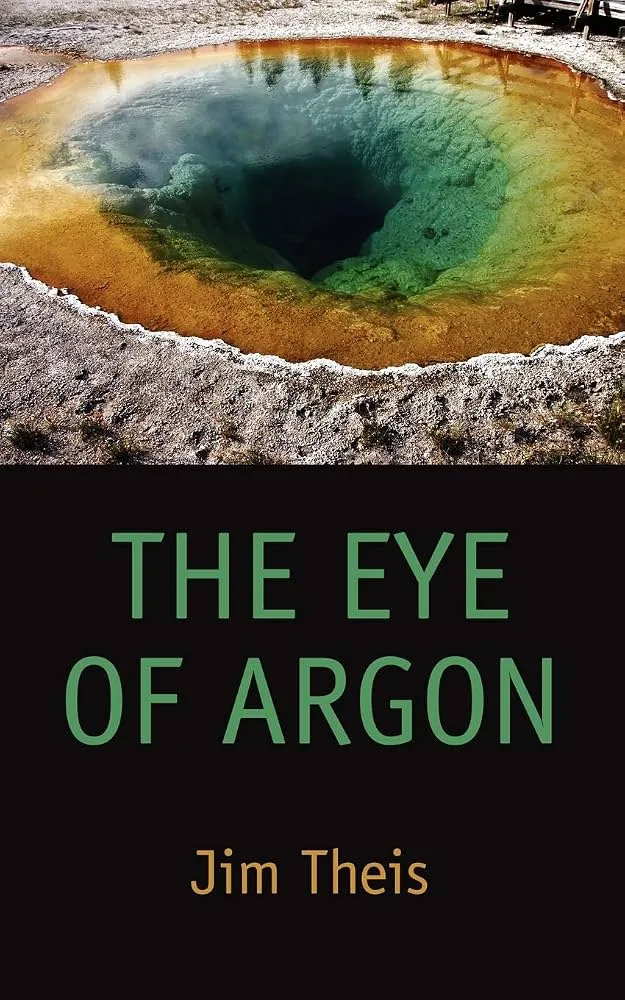
The Eye of Argon
by Jim Theis
Overwrought, Unintentionally Comic
A real, unedited Premium analysis of a published book, produced by the same engine that reads your manuscript. Shown to demonstrate ProofIntelligence — it is not an endorsement by, or affiliated with, the author or publisher.
A fiery-maned barbarian named Grignr hacks his way through a corrupt city-state, rescues a captive maiden, and battles a blob monster born from a cursed jewel — all rendered in spectacularly tortured prose.
Executive Summary
The Eye of Argon is a ~15,000-word sword-and-sorcery novella written by 16-year-old Jim Theis in 1970, following the barbarian Grignr through a series of fights, captures, escapes, and rescues in a generic pseudo-medieval fantasy world. The prose is legendarily, spectacularly incompetent — riddled with misspellings, malapropisms, purple overwriting, and anatomical impossibilities that have made it the most famous piece of bad fantasy fiction in the English-speaking world. For over 50 years it has been a beloved cult artifact in SF fandom, used for convention turkey readings where participants try to read aloud without laughing. As a work of fiction it fails on virtually every craft dimension, but as a cultural phenomenon and unintentional comedy, it occupies a unique and enduring niche.
The Eye of Argon is not a publishable work of fantasy fiction — it is a cultural artifact, the 'Plan 9 from Outer Space' of sword-and-sorcery literature, written by a 16-year-old in 1970 and beloved in SF fandom for over 50 years as the gold standard of unintentionally terrible prose. Comparable to 'Atlanta Nights' (Travis Tea) in its cult status but distinguished by being entirely sincere, it has been published by Wildside Press and Ansible Editions as a curiosity. For the Indian market, there is virtually no existing audience — the work's appeal is inseparable from Western SF convention culture and English-language wordplay — making any commercial edition a high-risk proposition with extremely limited upside, best suited only as a niche import for English-language SF enthusiasts in India's metro markets.
This work cannot be meaningfully improved through editing — it would need to be entirely rewritten from scratch. The single highest-leverage action would be to commission a professional annotated edition with scholarly commentary, treating it as a cultural artifact rather than attempting to fix the prose. Add footnotes explaining each error and its comedic effect throughout all chapters.
Full text of the complete novella provided, including the historically 'lost' ending and extensive paratextual material. High confidence in assessment — this is a well-known work in SF fandom whose qualities (and deficiencies) are thoroughly documented.
The Eye of Argon is a legendarily poor piece of sword-and-sorcery fiction written by a 16-year-old in 1970, famous in SF fandom as the gold standard of unintentionally bad writing. While it has enormous cultural cachet as a curiosity, the prose is riddled with malapropisms, misspellings, purple overwriting, and fundamental craft failures that place it far below any publishable standard. Its value is entirely as a cult artifact and comedic reading exercise, not as a serious work of fantasy fiction.
Score Breakdown
Six craft dimensions and six market dimensions, each labelled by the analyser for this book.
Structure
Grignr, a barbarian warrior, kills two soldiers in the desert, rides to the city of Gorzom, seduces a tavern wench, decapitates a drunken soldier, and is captured by city guards who bring him before the corpulent prince Agaphim.
The opening establishes the Conan-derivative premise quickly but is undermined by catastrophic prose quality — misspellings, malapropisms, and anatomically impossible descriptions sabotage any narrative momentum.
Grignr is imprisoned in a dungeon, kills a giant rat with his bare hands, fashions a weapon from its pelvis bone, escapes by killing his guards, navigates the castle's corridors, discovers a mausoleum with a hidden passage, and interrupts a human sacrifice to rescue the maiden Carthena from evil shamans.
The middle section has the most sustained action and the closest thing to genuine narrative tension, particularly the rat fight and the sacrificial rescue. However, the prose remains consistently terrible, with sentences that defy parsing.
Grignr and Carthena flee through a secret tunnel, encounter and kill Agafnd and Prince Agaphim, escape to the open air, but the Eye of Argon transforms into a vampiric blob that nearly kills Grignr before he destroys it with fire.
The ending is rushed and bizarre, with the blob monster appearing from nowhere as a deus ex machina threat. The resolution is abrupt and unsatisfying, though it has a certain gonzo charm. The final line is unintentionally hilarious.
Pacing
The pacing is actually one of the novella's relative strengths — it moves quickly, rarely lingers, and delivers action at regular intervals. The dungeon chapter (Ch. 3-4) is the only significant energy dip. The climactic shaman massacre is the energy peak, though the blob monster ending provides a secondary spike.
Narrative Tension
Story Arc
Peak: Grignr plunges through the sarcophagus into the sacrificial chamber, unleashing a berserker assault on the shamans while rescuing Carthena from the altar
The tension curve follows a rough adventure-story pattern with multiple peaks and valleys. The dungeon section creates a significant tension trough that the story struggles to recover from. The shaman massacre is the true climax, but the blob monster provides an unexpected secondary peak that feels disconnected from the main narrative. The resolution is abrupt — tension drops from 85 to near-zero in a single paragraph.
Emotional Rhythm
Emotional Journey
The emotional journey is dominated by two registers: violent aggression and brooding despair, with occasional bursts of lust. There is almost no emotional subtlety — Grignr oscillates between killing things and being angry about not killing things. The dungeon section attempts genuine psychological depth (contemplating a life without freedom) but the prose undermines any emotional resonance. The brief moment of tenderness with Carthena is the closest the story comes to genuine human feeling, but it's immediately overwhelmed by more violence.
Chapter Audit
Every chapter read and rated — 11 in this book.
Chapter 1
Grignr kills two soldiers in the desert and rides toward the city of Gorzom, fleeing a bounty.
Establishes premise but prose is catastrophically overwritten.
Chapter 2
Grignr enters a tavern, seduces a wench, decapitates a soldier, is captured and brought before Prince Agaphim.
Most eventful chapter; pacing works despite prose disasters.
Chapter 3
Grignr awakens in a pitch-black dungeon and contemplates his imprisonment and lost freedoms.
Introspection attempt fails; repetitive and overwrought.
Chapter 3½
Cutaway to a sacrificial altar where shamans prepare a naked maiden for ritual sacrifice to the idol of Argon.
Vivid scene-setting buried under purple prose avalanche.
Chapter 4
Grignr fights a giant rat in his cell, kills it by twisting its head off, and fashions a weapon from its pelvis bone.
Best sustained tension in the novella; visceral despite prose.
Chapter 5
The maiden kicks a shaman in the groin and is overwhelmed by the enraged priests.
Unintentionally comic; the groin-kick is memorably absurd.
Chapter 6
Grignr escapes his cell by killing two guards, disguises himself, navigates corridors, triggers a booby trap, and discovers the mausoleum.
Most competent action sequence; genuine narrative momentum.
Chapter 6 (continued)
Grignr discovers the sacrificial chamber through a sarcophagus, rescues Carthena, and slaughters the shamans.
Climactic rescue scene has real energy despite everything.
Chapter 7
The epileptic shaman recovers and pursues Grignr and Carthena through the tunnels.
Brief chapter; sets up the booby trap payoff.
Chapter 7½
The pursuing shaman is killed by the reset booby trap; Grignr and Carthena flee through a secret tunnel, killing Agafnd and Agaphim.
Rushed pacing; too many events crammed together.
The Lost Ending
The Eye of Argon transforms into a vampiric blob that attacks Grignr; he destroys it with fire and rides off with Carthena.
Bizarre tonal shift; blob monster is narratively unearned.
What's Working
Cult Cultural Status
The Eye of Argon is the most famous piece of bad fantasy fiction in the English-speaking world, with over 50 years of fandom history, convention readings, and scholarly attention. This cultural cachet is genuinely unique.
Unintentional Entertainment Value
The prose is so consistently, spectacularly bad that it achieves a kind of negative sublimity — every page delivers multiple laugh-out-loud moments, from 'the segregated torso' to 'blotching things up.' This makes it genuinely entertaining to read.
Narrative Momentum
Despite everything, the story moves forward relentlessly. Grignr is always fighting, escaping, or rescuing someone. The plot never stalls for long, and the action sequences (rat fight, shaman massacre, tunnel escape) have genuine kinetic energy.
Distinctive Voice (Unintentional)
Jim Theis's prose is instantly recognizable — no other writer produces sentences like 'His sagging flabs rolled like a tub of upset jelly.' The voice is distinctive even if it's distinctively terrible, giving the work a paradoxical memorability.
Rich Paratextual Ecosystem
The surrounding scholarship — Lee Weinstein's research, the lost ending discovery, the Langford/Bond history — adds enormous value to any edition. The story of the story is arguably more interesting than the story itself.
What to Fix
Catastrophic Prose Quality
Nearly every sentence contains misspellings, malapropisms, grammatical errors, or impossible descriptions. 'Scarlet emerald,' 'lithe opaque nose,' 'emerald green orbs glared lustfully' — the writing fails at the most basic level of competent English composition.
Zero Character Development
Grignr has no arc, no internal conflict, and no growth. He is a static collection of muscles and 'emerald orbs' from first page to last. Carthena is a damsel-in-distress stereotype with no agency beyond kicking one shaman in the groin and torching Agaphim's face.
Derivative Worldbuilding
The setting is a transparent Conan pastiche with no original elements — corrupt city-states, evil priests, barbaric hero from the hills, sacrificial maidens. Even the names (Ecordian, Noregolian) feel randomly generated rather than thoughtfully constructed.
Incoherent Plot Logic
The blob monster appears from nowhere in the final pages with no foreshadowing. Characters die and reappear (Agafnd). The geography of the castle is impossible to follow. The 'Eye of Argon' jewel is described as both a 'scarlet emerald' and a 'dull red emerald' — it's unclear what it even is.
Extremely Limited Commercial Viability
The work is too short for standalone publication (novella length), too poorly written for any serious fantasy market, and too obscure outside Western SF fandom for broad appeal. The complete text being freely available online for decades further limits any commercial potential.
Prose
All chaptersEvery sentence contains multiple errors — misspellings, malapropisms, impossible descriptions, and thesaurus abuse that renders meaning opaque
Do not fix — preserve as-is and add scholarly annotations explaining each error's comedic effect for an annotated edition
Packaging
Paratextual materialThe raw text has been freely available online for decades, offering no reason for readers to purchase an edition
Create significant added value through annotations, restored illustrations, scholarly introduction, and the complete Langford/Bond history to justify a purchase price
Market Positioning
N/A — marketing concernThe work is unknown outside Western SF fandom and has no natural audience in the Indian market
Position as a 'literary curiosity' gift book rather than genre fiction — target English-language bookstores in Indian metros, Comic Con India vendors, and online SF communities
Character
Grignr
complete
Grignr undergoes no meaningful transformation — he begins as a violent, lustful barbarian and ends as a violent, lustful barbarian riding into the sunset
Grignr is a paper-thin Conan pastiche with no interior life, no growth, and no complexity. He exists solely to fight, lust, and deliver defiant one-liners. His 'emerald green orbs' are mentioned more often than any genuine emotion.
Prince Agaphim / The Eye of Argon
Agaphim is a stock corrupt ruler — fat, cruel, and incompetent. He poses minimal actual threat to Grignr and is dispatched anticlimactically in a tunnel. The Eye of Argon blob is a more interesting antagonist but appears too late and too randomly to function as a coherent opposing force.
Prose & Voice
The prose of The Eye of Argon is legendarily, spectacularly bad — but it is bad in a distinctive and memorable way, which paradoxically gives it a high voice-distinctness score. Every sentence strains for epic grandeur and achieves unintentional comedy through malapropisms ('emerald' used for a red gem, 'lithe opaque nose'), impossible anatomy ('sagging nipples' crushed to a 'yearning chest'), inconsistent spelling (Gorzam/Gorzom/Gorzom), and thesaurus abuse that produces phrases like 'the segregated torso of Grignr's bovine antagonist.' There is zero subtext — everything is stated, restated, and overstated.
“By the surly beard of Mrifk, Grignr kneels to no man!”
“All that remained was a dark red blotch upon the face of the earth, blotching things up.”
“His sagging flabs rolled like a tub of upset jelly, then compressed as he sucked in his gut in an attempt to conceal his softness.”
“Grignr's emerald green orbs glared lustfully at the wallowing soldier struggling before his chestnut swirled mount.”
“Gaping from its single obling socket was scintillating, many fauceted scarlet emerald”
“the engrossed titan ignored the queries of the inquisitive female, pulling her towards him and crushing her sagging nipples to his yearning chest”
Market & Audience
The Eye of Argon occupies a unique position as the most famous piece of bad fantasy fiction ever written. Its market value is entirely as a cult artifact and comedy prop, not as serious fantasy. In the Indian market specifically, it would have extremely limited appeal — the Conan pastiche tradition and SF fandom turkey-reading culture are primarily Western phenomena. Any Indian edition would need to be positioned as a literary curiosity with extensive contextual apparatus.
- The complete text has been freely available online since the 1990s, eliminating any scarcity value
- The target audience (Western SF fandom) is extremely niche and already saturated with copies
- No appeal to mainstream fantasy readers who expect competent prose
- Indian market has virtually no awareness of this cult artifact
- The work's appeal depends entirely on cultural context that doesn't translate to non-Western fandoms
- Position as an annotated scholarly edition with critical apparatus explaining its cultural significance
- Bundle with the extensive paratextual material (history, transcriber's notes) as a complete package
- Market through SF convention circuits and online fandom communities
- Price very low to encourage impulse purchases as novelty gifts
Publishing Plan
As a work of fiction, The Eye of Argon is completely unpublishable — it fails every basic standard of competent prose, characterization, and plotting. However, it has already been published multiple times as a cult curiosity (Wildside Press 2006, Ansible Editions 2015), and in that specific niche it has proven viable. Any new edition would need to compete with the freely available online text and existing editions, requiring significant added value through annotations, illustrations, or scholarly apparatus.
- Do not attempt to publish this as serious fantasy fiction — it would be rejected immediately by any competent editor
- If publishing as a cult artifact/curiosity edition, commission scholarly annotations and critical apparatus
- Include the full paratextual material (Langford/Bond history, Weinstein research, transcriber's notes) to provide context and value
- Consider an illustrated edition with intentionally over-the-top artwork matching the prose's energy
- Price very low and target SF convention vendor tables and online fandom communities
This work should NOT be rewritten — its value lies entirely in its original, unedited badness. Phase 1 should focus on creating scholarly annotations: footnotes explaining errors, malapropisms, and their comedic effect throughout all chapters.
Compile and edit the paratextual apparatus — the Langford/Bond history, Weinstein research, transcriber's notes, and a new introduction contextualizing the work for modern readers unfamiliar with SF fandom convention culture.
Commission new illustrations or restore the original Rikosh artwork to high quality. Design the cover and interior layout to evoke 1970s pulp sword-and-sorcery aesthetics. Prepare for print-on-demand and ebook formatting.
Comparable Titles
Conan the Barbarian
The Eye of Argon is a direct, transparent pastiche of Howard's Conan stories — Grignr is Conan with the serial numbers barely filed off. The corrupt city-states, evil priests, rescued maidens, and barbaric hero are all lifted wholesale from Howard's template, but executed without any of Howard's genuine pulp craftsmanship.
Atlanta Nights
Like The Eye of Argon, Atlanta Nights is famous as legendarily bad fiction — but Atlanta Nights was deliberately written badly by professional SF authors to expose a vanity press. The Eye of Argon's distinction is that it is entirely sincere, making it a more fascinating cultural artifact.
My Immortal
The Harry Potter fanfiction 'My Immortal' occupies a similar cultural niche in internet fandom — spectacularly incompetent writing that has become beloved as unintentional comedy. Both works raise questions about sincerity versus parody and have spawned extensive scholarly analysis of their authorship and cultural impact.
Reach & Rights
The Eye of Argon is essentially untranslatable. Its value lies entirely in its specific English-language prose failures — a French or Hindi translation of 'the segregated torso of Grignr's bovine antagonist' would either correct the errors (destroying the appeal) or introduce artificial errors (missing the point of genuine incompetence). The work is culturally bound to Anglophone SF fandom in a way that makes international markets nearly impossible.
Series potential is low because the work's appeal is inseparable from its specific author's unintentional incompetence. Jim Theis's death in 2002 forecloses any authentic continuation. Pastiche sequels have been attempted in fandom but none have captured the original's lightning-in-a-bottle quality of genuine, earnest badness. The worldbuilding is too thin and derivative to sustain expansion on its own merits.
A deliberately campy, self-aware short film or web series that recreates the most absurd moments of the most famous bad fantasy story ever written — played completely straight by the cast while the audience is in on the joke.
The work is in a complex rights situation — Jim Theis died in 2002, and the text has been freely distributed for decades. Any adaptation would need to clear rights with the Theis estate. For the Indian market, audio rights are the most viable — produce a high-quality dramatic reading for Audible India or Storytel. Film/TV rights have minimal value unless a major comedy creator (like a Vir Das or Biswa Kalyan Rath) wanted to create a meta-comedy about bad fantasy writing.
The Package
Written for you, ready to send — the back cover, the pitch and the shelf it sits on.
Grignr is a barbarian with emerald green orbs, a shock of fiery red hair, and an absolute refusal to kneel. When he's captured by the corpulent Prince Agaphim and thrown into a lightless dungeon, he must fight a giant rat, escape his cell with a sharpened rodent bone, slaughter a cult of evil shamans, rescue the beautiful Carthena, and face the terrifying Eye of Argon itself. Written by a 16-year-old in 1970, this is the most famous piece of bad fantasy fiction ever created — a beloved cult classic that has been read aloud at SF conventions for over fifty years.
In the savage lands of the Noregolian Empire, a barbarian named Grignr fights, kills, and lusts his way through a corrupt city-state — battling soldiers, rats, evil priests, and a sentient blob in the most legendarily terrible fantasy novella ever written.
What if the worst fantasy novella ever written became one of the most beloved — read aloud at conventions for fifty years, studied by scholars, and cherished by thousands who can't get through a single page without laughing?
The Eye of Argon is a 15,000-word sword-and-sorcery novella written by sixteen-year-old Jim Theis in 1970, following the barbarian Grignr through fights, dungeons, sacrificial cults, and a battle with a sentient blob — all rendered in prose so spectacularly overwrought that it has become the gold standard of unintentionally bad fantasy fiction. For over fifty years, it has been a beloved institution at SF conventions worldwide, where participants attempt to read it aloud without laughing. This edition includes the complete text with the legendary 'lost ending' discovered in 2004, the original 1970 illustrations by Jay T. Rikosh, and comprehensive scholarly apparatus tracing the work's remarkable cultural history.
- Books > Science Fiction & Fantasy > Fantasy > Sword & Sorcery
- Books > Humor & Entertainment > Humor > Parodies
- Books > Science Fiction & Fantasy > Science Fiction > History & Criticism
Content Advisory
The work contains pervasive sexual objectification of its female characters — women are consistently described by their breasts and referred to as 'wenches,' 'sluts,' and 'harlots.' Carthena has minimal agency and exists primarily as an object to be rescued and embraced. The cult sacrifice scene has overtones of sexual violence. A sensitivity reader would flag the treatment of women as deeply problematic, though this is consistent with (and arguably a parody of) the 1970s sword-and-sorcery genre's worst tendencies. The violence is extremely graphic but rendered in such overwrought prose that it reads as cartoonish rather than disturbing.
Your book deserves this analysis
Get a Premium ProofIntelligence report on your own manuscript — and register it with tamper-proof timestamps that prove your authorship forever.
Free plan available · no credit card to start.
Scores and commentary are produced by ProofIntelligence and reflect this analysis only. Titles and authors are named for identification; ProofBooks claims no affiliation with, or endorsement by, them.