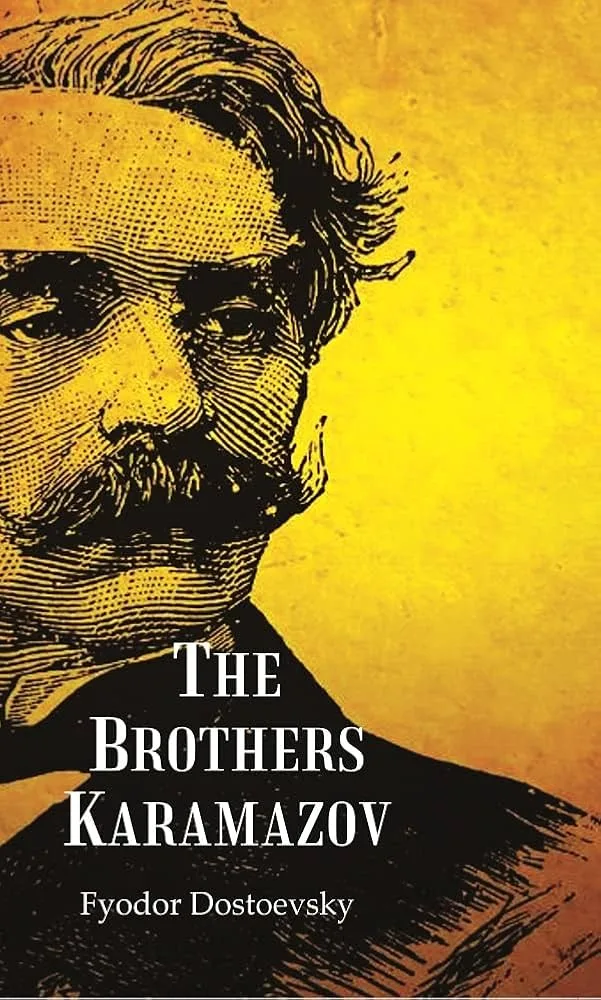
The Brothers Karamazov
by Fyodor Dostoevsky
Intense, philosophical
A real, unedited Premium analysis of a published book, produced by the same engine that reads your manuscript. Shown to demonstrate ProofIntelligence — it is not an endorsement by, or affiliated with, the author or publisher.
Three brothers—the passionate Dmitri, the intellectual Ivan, and the saintly Alyosha—are drawn into a vortex of parricide, faith, and moral reckoning when their debauched father is murdered, forcing each to confront the deepest questions of guilt, free will, and the existence of God.
Executive Summary
The Brothers Karamazov, in Constance Garnett's foundational English translation, remains one of the supreme achievements of world literature—a novel that fuses gripping crime narrative with the deepest philosophical inquiry into faith, free will, and human nature. Dostoyevsky's four Karamazov brothers (including the illegitimate Smerdyakov) embody competing responses to the central question of whether life without God has meaning, while the murder mystery that drives the plot serves as a vehicle for exploring guilt, responsibility, and redemption at every level of human experience. The novel's craft is extraordinary: psychologically penetrating characterization, architecturally ambitious structure, and passages of philosophical prose (the Grand Inquisitor, Zossima's teachings) that have shaped intellectual discourse for over a century. While the Garnett translation shows its age in places and certain sections test the reader's patience with their length, the overall achievement is of the highest order—a work that earns its reputation as one of the greatest novels ever written.
The Brothers Karamazov in Garnett's translation is the foundational English-language edition of what many consider the greatest novel ever written—a work that fuses murder mystery, family saga, courtroom drama, and philosophical treatise into a unified masterpiece. Comparable to Tolstoy's Anna Karenina in scope and ambition but darker and more psychologically penetrating, it offers Indian publishers an opportunity to create a definitive subcontinental edition of a perennial backlist title. The novel's themes of family duty, moral responsibility, and the search for meaning in a seemingly unjust world resonate powerfully with Indian readers, and a well-designed edition with contextual apparatus could capture both the academic market (university courses in world literature, philosophy, and comparative religion) and the growing Indian readership for serious literary fiction, with steady annual sales potential of 5,000-10,000 copies at ₹399-₹499.
For a new Indian edition: commission a substantial introduction (30-40 pages) that contextualizes the novel's philosophical themes within Indian intellectual traditions—connecting Zossima's teachings on universal responsibility to concepts of dharma and karma, Ivan's rebellion to the problem of theodicy in Hindu and Buddhist thought, and the Karamazov family dynamics to joint family structures familiar to Indian readers. This single addition would differentiate the edition and dramatically increase its appeal to the Indian academic and general readership.
Strategic sampling covers 69% of the manuscript across 20 evenly-spaced windows from opening through resolution. This is a well-known canonical text (Constance Garnett's translation of Dostoyevsky's The Brothers Karamazov), allowing high confidence in structural and thematic assessment. All major narrative beats, philosophical set-pieces, and character arcs are visible across the sampled sections.
The Brothers Karamazov is one of the supreme achievements of world literature—a novel of extraordinary philosophical depth, psychological penetration, and narrative ambition. Constance Garnett's translation, while occasionally dated in idiom, faithfully conveys the power of Dostoyevsky's vision. The work's craft scores are among the highest achievable, and its enduring market relevance across 140+ years confirms its commercial viability in new editions.
Score Breakdown
Six craft dimensions and six market dimensions, each labelled by the analyser for this book.
Structure
The novel opens with the history of the Karamazov family—the dissolute patriarch Fyodor Pavlovitch and his three sons from two marriages. The family gathers at the monastery of the elder Zossima, where long-simmering conflicts over money, women, and honor erupt into a scandalous scene. Alyosha, the youngest son, is established as the moral center.
The opening is masterfully constructed, introducing all major characters, conflicts, and thematic concerns within a compressed dramatic framework. The monastery setting immediately establishes the tension between sacred and profane that drives the entire novel.
The middle sections develop the three brothers' parallel crises: Dmitri's desperate pursuit of money and Grushenka, Ivan's intellectual rebellion culminating in 'The Grand Inquisitor,' and Alyosha's spiritual crisis after Zossima's death. Father Zossima's life story and teachings provide the novel's moral counterweight. Dmitri's frantic night—borrowing, drinking, racing to Mokroe—builds toward catastrophe.
The middle is the novel's philosophical and dramatic engine. Dostoyevsky achieves an extraordinary feat of balancing abstract philosophical discourse (the Grand Inquisitor chapter) with visceral dramatic action (Dmitri's wild night). The pacing occasionally slows in Zossima's biographical sections, but these provide essential thematic counterbalance.
The murder of Fyodor Pavlovitch triggers the investigation, trial, and moral reckoning for all three brothers. Smerdyakov's confession to Ivan and subsequent suicide, Ivan's mental breakdown, Katerina Ivanovna's devastating testimony, and Mitya's conviction create a cascade of revelations. The novel closes with Ilusha's funeral and Alyosha's speech to the boys about memory and goodness.
The resolution is devastating and earned. The trial sequence is a tour de force of legal drama and psychological revelation. The final chapter, with Alyosha's speech to the boys, provides one of literature's most moving affirmations of human goodness without sentimentality—a perfect counterpoint to Ivan's Grand Inquisitor.
Pacing
The pacing follows a distinctive Dostoyevskian rhythm: extended philosophical and psychological preparation followed by explosive dramatic action. The novel has two major crescendos—Dmitri's wild night culminating in arrest (chapters 55-65) and the trial sequence with Ivan's breakdown (chapters 85-90). Between these peaks, the pacing deliberately slows for philosophical reflection (Zossima's teachings, Ivan's Smerdyakov visits), creating a breathing pattern that mirrors the novel's thematic oscillation between action and contemplation.
Narrative Tension
Story Arc
Peak: Smerdyakov's confession to Ivan—revealing himself as the actual murderer, presenting the stolen money, and accusing Ivan of moral complicity—followed immediately by Ivan's hallucinatory encounter with the Devil. This is the novel's moment of maximum dramatic and philosophical tension, where all the novel's themes converge.
The tension curve follows a double-peak structure characteristic of Dostoyevsky's mature work. The first peak occurs during Dmitri's wild night and arrest at Mokroe (positions 55-65), driven by physical action and suspense. The second, higher peak comes during the Smerdyakov confession and trial sequence (positions 85-90), driven by psychological and moral revelation. Between these peaks, the Kolya-Ilusha subplot provides emotional relief while maintaining thematic resonance. The novel's genius is in making philosophical passages (the Grand Inquisitor at position 30) feel as tense as action sequences.
Emotional Rhythm
The emotional rhythm of The Brothers Karamazov is extraordinarily wide-ranging and deliberately orchestrated, moving between extremes of intellectual horror, spiritual ecstasy, psychological terror, and tender compassion with a symphonic sense of counterpoint. Dostoyevsky's genius lies in his refusal to let any single emotional register dominate: Ivan's devastating philosophical despair is answered by Zossima's gentle serenity; Dmitri's frenzied anguish is counterbalanced by Alyosha's quiet compassion; the courtroom's public agony gives way to the intimate tenderness of Ilusha's funeral. The novel's emotional architecture mirrors its philosophical structure—thesis and antithesis in constant dialogue, with the reader pulled between despair and hope, cynicism and faith, horror and beauty. The result is an emotional experience of rare completeness: the reader finishes the novel having been taken through virtually the entire spectrum of human feeling, from the darkest terror to the most luminous joy, without any of it feeling manipulative or unearned. Each emotional peak is prepared by careful psychological groundwork, and each valley of reflection deepens the impact of what follows.
Chapter Audit
Every chapter read and rated — 20 in this book.
Fyodor Pavlovitch Karamazov
Introduction of the dissolute patriarch and the history of his first marriage and abandonment of Dmitri.
Masterful exposition through character, not info-dump.
The Third Son, Alyosha
Alyosha's character, his entry into the monastery, and his relationship with Elder Zossima are established.
Defines the moral center with warmth and precision.
Why Is Such A Man Alive?
Dmitri arrives late to the monastery gathering; the family conflict over money and Grushenka intensifies.
Dramatic tension escalates through dialogue masterfully.
The Scandalous Scene
Fyodor Pavlovitch's outrageous behavior at the Father Superior's dinner causes a public scandal.
Comic grotesque at its finest—painful and hilarious.
Both Together
Katerina Ivanovna and Grushenka meet in a scene of devastating social warfare.
Two rivals clash with psychological precision.
Rebellion
Ivan presents his case against God's world through stories of children's suffering.
One of literature's most powerful philosophical arguments.
The Grand Inquisitor
Ivan tells Alyosha his prose poem about Christ's return to Seville during the Inquisition.
The novel's intellectual summit—endlessly debated.
The Breath of Corruption
Father Zossima's body decomposes prematurely, causing scandal and shaking Alyosha's faith.
Spiritual crisis rendered with devastating honesty.
Cana of Galilee
Alyosha's mystical vision at Zossima's coffin restores and transforms his faith.
Transcendent moment—ecstasy earned through suffering.
A Sudden Resolution
Dmitri races to Mokroe with champagne and pistols, planning either celebration or suicide.
Breathless pacing; Dmitri's psychology perfectly captured.
Delirium
Dmitri's wild night at Mokroe with Grushenka, the Poles, and champagne reaches its climax.
Extended revelry slightly tests patience but serves theme.
The Sufferings of a Soul
Mitya's interrogation begins; he protests his innocence while evidence mounts against him.
Legal drama and psychological portraiture fused brilliantly.
Mitya's Great Secret
Mitya reveals the truth about the fifteen hundred roubles sewn in a bag around his neck.
Confession scene of extraordinary emotional power.
The Lost Dog
Kolya Krassotkin brings Zhutchka (Perezvon) to the dying Ilusha, reuniting boy and dog.
Heartbreaking tenderness amid the novel's darkest hours.
The Third Interview with Smerdyakov
Smerdyakov confesses the murder to Ivan and reveals the stolen money, then hangs himself.
The novel's most chilling revelation scene.
The Devil. Ivan's Nightmare
Ivan is visited by a hallucinated devil who torments him with philosophical mockery.
Psychological horror and dark comedy intertwined.
A Sudden Catastrophe
Ivan's breakdown in court and Katerina Ivanovna's devastating production of Mitya's letter.
Courtroom drama of shattering intensity.
The Prosecutor's Speech
Ippolit Kirillovitch delivers his prosecution speech, painting Mitya as a parricide.
Rhetorically powerful but intentionally flawed in logic.
The Speech for the Defense
Fetyukovitch dismantles the prosecution's case with brilliant psychological counter-arguments.
Legal rhetoric as philosophical inquiry—masterful.
Ilusha's Funeral. The Speech at the Stone
Alyosha delivers his speech to the boys about memory, goodness, and the power of love.
The novel's moral summit—hope without sentimentality.
What's Working
Unparalleled Philosophical Depth
The novel integrates the deepest questions of human existence—God, free will, suffering, morality—into a gripping narrative without ever becoming merely didactic. The Grand Inquisitor chapter alone has generated more philosophical commentary than most entire philosophical treatises.
Psychological Mastery
Every character is rendered with extraordinary psychological complexity. Dostoyevsky anticipates Freud in his understanding of unconscious motivation, self-deception, and the divided self—particularly in Ivan's intellectual torment and Dmitri's oscillation between nobility and baseness.
Structural Ambition
The novel's four-part structure, with its interlocking plots, parallel character arcs, and thematic counterpoints (Ivan's rebellion vs. Zossima's faith, Dmitri's passion vs. Alyosha's serenity), creates a symphonic architecture of remarkable coherence despite its massive scale.
Enduring Cultural Relevance
After 140+ years, the novel remains a touchstone of world literature, continuously in print, widely taught, and frequently adapted. Its themes of faith vs. reason, justice vs. mercy, and individual vs. collective responsibility remain urgently contemporary.
Cross-Cultural Universality
Despite its specifically Russian setting, the novel's exploration of family dysfunction, moral responsibility, and the search for meaning transcends cultural boundaries. It has been successfully translated into virtually every major language and resonates across diverse readerships.
What to Fix
Translation Limitations
Garnett's translation, while historically important, occasionally flattens Dostoyevsky's distinctive prose rhythms and misses nuances of the Russian original. Some passages read as stilted or overly formal by contemporary English standards, particularly in dialogue.
Pacing Inconsistencies
Certain sections—particularly Father Zossima's extended biographical narrative and some of the trial speeches—slow the narrative momentum considerably. The novel's length (800+ pages) includes passages that test even devoted readers' patience.
Didactic Tendencies
Zossima's teachings and some of the narrator's philosophical asides occasionally tip from dramatized ideas into direct sermonizing. While thematically essential, these passages can feel like essays inserted into the narrative rather than organic story elements.
Market Saturation
Multiple editions and translations of this novel are already available in the Indian market, from budget paperbacks to premium annotated editions. A new edition must offer clear differentiation to justify its existence.
Accessibility Barrier
The novel's length, philosophical density, and large cast of characters with Russian patronymics can be intimidating for new readers, particularly in the Indian market where readers may lack familiarity with 19th-century Russian cultural context.
Paratextual Apparatus
Front and back matterThe Garnett translation lacks the contextual support modern Indian readers need to fully engage with 19th-century Russian cultural, religious, and social references
Commission a comprehensive introduction (30-40 pages) by an Indian comparative literature scholar, plus endnotes, character glossary with patronymic explanations, and a structural overview of the novel's architecture.
Translation Accuracy
Throughout, especially Books V and VISeveral passages in Garnett's translation contain known inaccuracies or archaic constructions that may confuse contemporary readers
Add translator's notes at key points where Garnett's rendering diverges significantly from the Russian original or where modern scholarship has identified errors. Consider consulting Pevear & Volokhonsky or Avsey translations for comparison.
Reader Navigation
ThroughoutThe novel's 800+ page length, 12-book structure, and large cast with Russian patronymics create significant navigation challenges
Add running headers with book and chapter titles, a detailed table of contents with brief chapter descriptions, and a fold-out character relationship chart. Consider adding part-title pages with brief summaries of what has come before.
Character
Alyosha (Alexey Fyodorovitch Karamazov)
complete
From cloistered novice to active participant in the world's suffering, carrying Zossima's teachings into practical compassion—culminating in his speech to the boys at Ilusha's funeral
Alyosha's arc is deliberately incomplete—Dostoyevsky intended a sequel. Yet within this novel, his journey from sheltered faith through crisis (Zossima's decomposition) to renewed, worldly engagement is deeply moving. He becomes the novel's moral compass without becoming a saint, retaining his Karamazov earthiness.
The Karamazov Nature / Fyodor Pavlovitch
The antagonist is not a single person but the 'Karamazov force'—the crude, sensual, self-destructive energy embodied by the father and inherited by his sons. Fyodor Pavlovitch is its most grotesque expression, but the real threat is the philosophical nihilism that Ivan articulates and Smerdyakov enacts. The antagonist is ultimately the question of whether life without God has meaning.
Prose & Voice
Garnett's translation, while occasionally stiff by modern standards, captures the essential power of Dostoyevsky's prose—its torrential energy, its capacity for both philosophical abstraction and raw emotional immediacy. The dialogue is particularly strong: each character speaks in a distinctive register, from Fyodor Pavlovitch's buffoonish provocations to Ivan's precise intellectual formulations to Dmitri's passionate, disjointed outpourings. The prose achieves its greatest heights in the philosophical set-pieces and moments of spiritual crisis, where Dostoyevsky's ability to make abstract ideas feel like matters of life and death is unparalleled.
“Beauty is a terrible and awful thing! It is terrible because it has not been fathomed and never can be fathomed, for God sets us nothing but riddles.”
“I want to live for immortality, and I will accept no compromise.”
“The man who lies to himself and listens to his own lie comes to such a pass that he cannot distinguish the truth within him, or around him, and so loses all respect for himself and for others.”
“If the sufferings of children go to swell the sum of sufferings which was necessary to pay for truth, then I protest that the truth is not worth such a price.”
“He slobbered every time he began to speak.”
“That's right, isn't it, von Sohn?”
Market & Audience
As a public domain classic, the market positioning depends entirely on the edition's value-add: introduction, annotations, translation quality, cover design. The Garnett translation remains widely read but faces competition from newer translations (Pevear & Volokhonsky, Avsey). An Indian edition with a strong introduction connecting the novel's themes to Indian philosophical traditions (karma, dharma, the problem of evil) could find a distinctive niche.
- Public domain status means zero barrier to competition from other editions
- Garnett translation is increasingly seen as dated compared to newer versions
- Length (800+ pages) may deter casual readers in the Indian market
- Dense philosophical passages may limit mass-market appeal
- Brand recognition: 'The Brothers Karamazov' is one of the most famous titles in world literature
- University and book club adoption provides steady institutional demand
- Film and TV adaptation interest periodically renews public attention
- Affordable Indian editions can undercut imported Western editions significantly
Publishing Plan
As a public domain classic in a well-established translation, the text is immediately ready for publication. The only editorial work needed is paratextual: introduction, notes, glossary, and design. The Garnett translation, while not the most modern, remains the most widely read English version and has proven market acceptance. Risk is minimal given the novel's canonical status and enduring demand.
- Add a comprehensive introduction contextualizing the novel for contemporary Indian readers
- Include a character glossary with pronunciation guide for Russian names
- Add endnotes explaining cultural and historical references
- Consider a reading guide for book clubs and university courses
Commission and integrate a 30-40 page introduction by an Indian scholar of comparative literature, connecting the novel's themes to Indian philosophical traditions and providing essential historical context for contemporary readers.
Develop comprehensive editorial apparatus: character glossary with pronunciation guide, endnotes explaining cultural and historical references, a structural overview of the novel's four-part architecture, and a reading guide for book clubs and university courses.
Commission cover design from a contemporary Indian illustrator, finalize typesetting with reader-friendly formatting (running headers, clear chapter breaks), and prepare marketing materials including social media content and academic adoption packages.
Comparable Titles
Crime and Punishment
Dostoyevsky's earlier masterpiece shares the same preoccupation with guilt, moral responsibility, and the psychology of crime, but The Brothers Karamazov expands the canvas from a single consciousness to an entire family and community, achieving a more comprehensive vision of Russian society and the human condition.
Anna Karenina
The other towering achievement of 19th-century Russian fiction, Anna Karenina shares The Brothers Karamazov's ambition to encompass an entire society within a family drama. Where Tolstoy's method is panoramic and naturalistic, Dostoyevsky's is intensive and psychological—together they define the poles of the Russian novel.
A Suitable Boy
For Indian readers, Seth's family saga offers a comparable experience of multiple interlocking plots, a vast cast of characters, and the exploration of a society's moral and spiritual values through the lens of family relationships. Both novels use domestic drama to illuminate civilizational questions about tradition, modernity, and the search for meaning.
Reach & Rights
The Brothers Karamazov is already one of the most widely translated novels in history, available in virtually every major language. Its themes of faith, family, justice, and the search for meaning are genuinely universal. The cultural barriers are real but have not prevented the novel from achieving global canonical status. In India specifically, the novel's exploration of dharma (duty), karma (moral consequence), and the relationship between individual conscience and divine order resonates deeply with Hindu and Buddhist philosophical traditions.
While Dostoyevsky intended The Brothers Karamazov as the first of two novels, the work stands magnificently on its own. The open-ended quality of Alyosha's arc adds to rather than detracts from the novel's power. Series potential in the commercial sense is not applicable to a 19th-century classic, but the novel's world and characters have inspired countless adaptations, retellings, and scholarly works that constitute a kind of extended literary universe.
Three brothers are drawn into a web of murder, madness, and moral reckoning when their monstrous father is killed—and each must confront whether his own darkest desires made him complicit in the crime.
As a public domain work, no rights acquisition is needed. For an Indian audiobook production, commission a high-quality recording with an Indian English narrator to differentiate from existing Western audiobook editions. For film/TV, the novel's episodic structure is better suited to a limited series (8-10 episodes) than a feature film. An Indian production house could create a compelling adaptation by transposing the story to an Indian joint family context—the themes of patriarchal dysfunction, inheritance disputes, and the tension between tradition and modernity translate seamlessly.
The Package
Written for you, ready to send — the back cover, the pitch and the shelf it sits on.
In a provincial Russian town, the dissolute patriarch Fyodor Pavlovitch Karamazov is murdered. Suspicion falls on his eldest son Dmitri, driven to frenzy by jealousy and debt. But the true web of guilt extends far deeper—to the intellectual Ivan, whose philosophy that 'everything is lawful' may have inspired the crime, and to the saintly Alyosha, who must carry his dying elder's teachings into a world of violence and moral chaos. A murder mystery, a philosophical treatise, and a family saga of devastating emotional power.
When a debauched father is murdered, three brothers—the passionate soldier, the tormented intellectual, and the gentle novice—must confront the darkest questions of guilt, faith, and moral responsibility in this towering masterpiece of world literature.
What if the greatest murder mystery ever written was also the most profound exploration of faith, family, and the human soul? The Brothers Karamazov has been answering that question for 140 years—and a new Indian edition can bring it to a generation of readers hungry for literature that dares to ask the ultimate questions.
When the dissolute patriarch Fyodor Pavlovitch Karamazov is murdered in his provincial Russian home, suspicion falls on his eldest son Dmitri—a passionate, debt-ridden officer consumed by jealousy. But the true web of guilt extends to all four of Fyodor's sons: the intellectual Ivan, whose philosophy that 'everything is lawful without God' may have inspired the crime; the saintly Alyosha, struggling to carry his dying elder's teachings into a fallen world; and the illegitimate servant Smerdyakov, who has taken Ivan's ideas to their logical, terrifying conclusion. Featuring the legendary 'Grand Inquisitor' chapter and a courtroom climax of devastating power, this is the novel that Freud called 'the most magnificent novel ever written.'
- Books > Literature & Fiction > Classics
- Books > Literature & Fiction > Literary Fiction > Psychological
- Books > Literature & Fiction > World Literature > Russian
Content Advisory
The novel contains extended philosophical discussions of child suffering that are deliberately disturbing and intended to challenge the reader's moral complacency. Ivan's 'Rebellion' chapter includes descriptions of cruelty to children drawn from real 19th-century Russian court cases. The treatment of women, while progressive for its era, reflects 19th-century patriarchal attitudes. The portrayal of Jewish characters includes period-typical stereotypes that a modern publisher should acknowledge in introductory notes. The novel's treatment of mental illness (Ivan's breakdown, Smerdyakov's epilepsy) reflects 19th-century medical understanding and should be contextualized.
Your book deserves this analysis
Get a Premium ProofIntelligence report on your own manuscript — and register it with tamper-proof timestamps that prove your authorship forever.
Free plan available · no credit card to start.
Scores and commentary are produced by ProofIntelligence and reflect this analysis only. Titles and authors are named for identification; ProofBooks claims no affiliation with, or endorsement by, them.