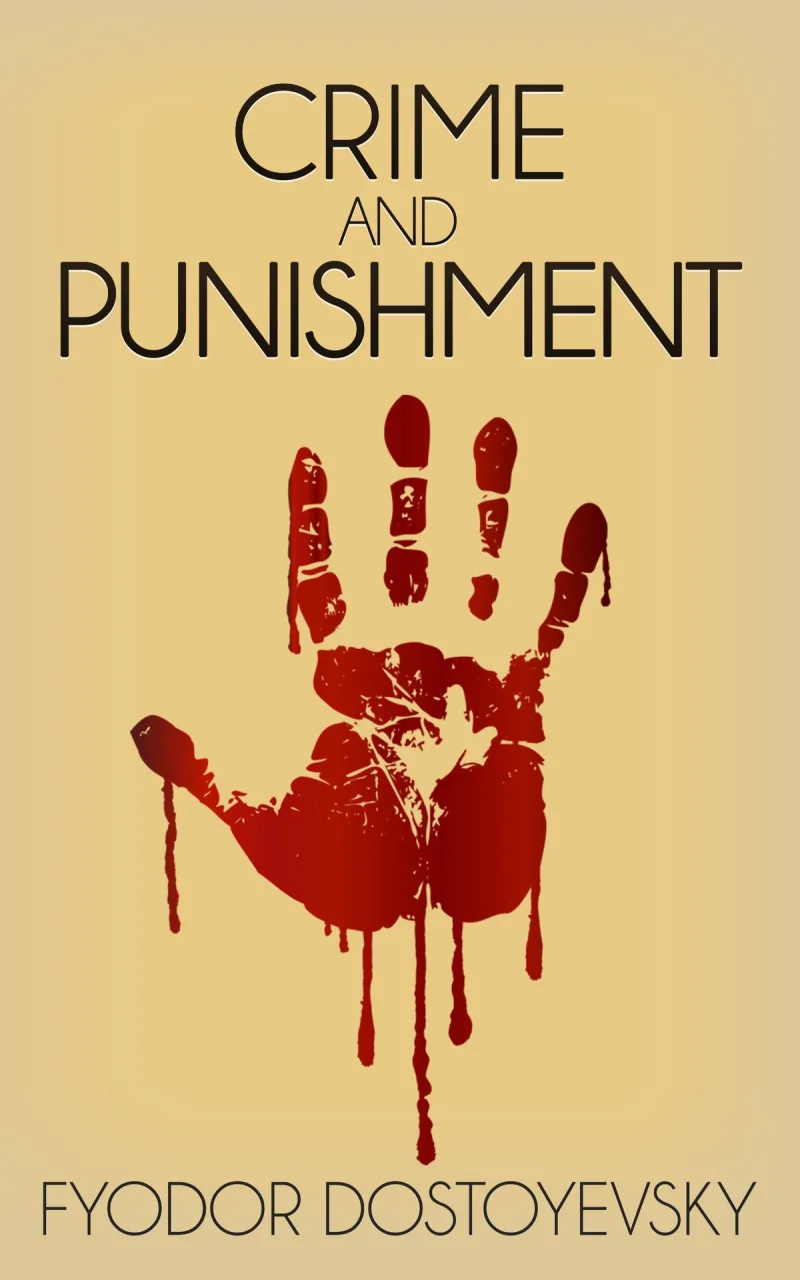
Crime and Punishment
by Fyodor Dostoevsky
Dark, Intense
A real, unedited Premium analysis of a published book, produced by the same engine that reads your manuscript. Shown to demonstrate ProofIntelligence — it is not an endorsement by, or affiliated with, the author or publisher.
A destitute former student in St. Petersburg murders a pawnbroker to prove his theory that extraordinary men are above moral law, only to be consumed by guilt, paranoia, and the relentless pursuit of a cunning detective—until love and suffering offer the possibility of redemption.
Executive Summary
Crime and Punishment is Fyodor Dostoevsky's 1866 masterpiece of psychological realism, following Rodion Raskolnikov, a brilliant but impoverished ex-student who commits a double murder to test his theory that extraordinary individuals are exempt from conventional morality. The novel unfolds as a devastating psychological thriller, with Raskolnikov's internal torment mirrored by the cat-and-mouse investigation led by the shrewd detective Porfiry Petrovitch. Interwoven are the stories of the Marmeladov family—particularly Sonia, whose selfless suffering becomes the moral counterweight to Raskolnikov's nihilism. The Constance Garnett translation, while occasionally archaic, preserves the novel's extraordinary power and remains the most widely read English version. This is a foundational text of world literature whose themes of guilt, redemption, poverty, and the limits of rationalism remain urgently relevant.
Crime and Punishment is the gold standard of psychological literary fiction—a novel that has sold millions of copies worldwide for over 150 years and shows no signs of diminishing relevance. For the Indian market, the opportunity lies not in the text itself (which is public domain and freely available) but in creating a definitive Indian edition: a beautifully designed volume with a scholarly introduction connecting Dostoevsky's themes to Indian philosophical traditions, comprehensive notes for students and general readers, and positioning that captures both the academic market (university syllabi, competitive exams) and the growing Indian literary fiction readership. Comparable to recent successful Indian editions of Tolstoy and Kafka by Penguin India and Fingerprint Classics, a well-executed edition could sell 10,000-15,000 copies annually across formats. The investment is modest (₹2-4 lakhs for editorial apparatus and design) with virtually guaranteed returns.
For a new Indian edition, the single highest-impact improvement would be commissioning a fresh, contemporary English translation (or using the Pevear-Volokhonsky version) paired with a scholarly introduction contextualising the novel for Indian readers—drawing parallels between Raskolnikov's poverty and Indian urban precarity, and between Dostoevsky's moral philosophy and Indian philosophical traditions of karma and dharma. This would dramatically improve accessibility and market positioning.
Full text of the Constance Garnett translation of Crime and Punishment was provided and analysed comprehensively. This is one of the most studied novels in world literature, allowing for extremely high-confidence assessment of craft, structure, and market positioning.
Crime and Punishment is a masterwork of psychological literary fiction that has endured for over 150 years. Its craft scores are exceptional across every dimension—particularly in depth, originality, and thematic clarity. The Garnett translation, while dated in places, remains highly readable and commercially viable in the Indian market, where classic world literature enjoys steady demand among educated readers, students, and literary enthusiasts.
Score Breakdown
Six craft dimensions and six market dimensions, each labelled by the analyser for this book.
Structure
Parts I-II establish Raskolnikov's desperate poverty, his obsessive planning, the horrific double murder of the pawnbroker Alyona Ivanovna and her sister Lizaveta, and the immediate psychological aftermath—fever, paranoia, and the first encounters with the police. The Marmeladov family subplot introduces Sonia and the theme of suffering.
The opening is masterfully constructed, building from Raskolnikov's feverish hesitation through the murder to the immediate psychological collapse. The pacing is extraordinary—the reader is trapped inside Raskolnikov's consciousness with no escape.
Parts III-V develop the cat-and-mouse dynamic between Raskolnikov and Porfiry Petrovitch across three increasingly intense interviews. Simultaneously, the Luzhin-Dounia marriage plot unfolds and is resolved, Svidrigaïlov emerges as Raskolnikov's dark double, and Raskolnikov's confession to Sonia becomes the novel's moral turning point.
The middle sections are the novel's philosophical and psychological heart. While some passages with Luzhin feel overextended, the Porfiry interviews are among the greatest scenes in all fiction, and the Sonia confession is devastating in its emotional power.
Part VI and the Epilogue bring the novel to its conclusion: Porfiry's final visit where he openly names Raskolnikov as the murderer, Svidrigaïlov's dramatic suicide, Raskolnikov's public confession and surrender, and the Siberian epilogue where, after months of spiritual deadness, he finally experiences genuine repentance and love for Sonia.
The ending is powerful but the Epilogue's compressed timeline for Raskolnikov's spiritual transformation has been debated by critics for over a century. The Svidrigaïlov suicide sequence is brilliantly rendered. The final image of Raskolnikov weeping at Sonia's feet is deeply moving despite its brevity.
Pacing
The pacing follows a distinctive pattern: a slow-building first quarter that explodes into the murder sequence, followed by sustained high tension through the investigation, with periodic valleys for philosophical reflection and domestic scenes. The novel's middle sections (Parts III-IV) are slightly slower due to extended scenes with Luzhin and family dynamics, but the final third accelerates powerfully through the confession, Svidrigaïlov's climax, and the surrender. For a 19th-century novel of this length, the pacing is remarkably effective.
Narrative Tension
Story Arc
Peak: Raskolnikov trapped behind the locked door of the murdered women's flat as Koch and the student try to enter, then his miraculous escape down the stairs—the moment of maximum physical danger and psychological terror.
The tension curve follows a remarkable pattern: an early, devastating peak at the murder (position 22-25), followed by sustained high tension through the investigation and psychological deterioration, with secondary peaks at each Porfiry interview and the confession to Sonia. The novel maintains extraordinary tension across its length because the reader knows the truth while watching Raskolnikov's increasingly desperate attempts to evade it. The Epilogue deliberately releases tension to allow for spiritual resolution.
Emotional Rhythm
Emotional Journey
The emotional arc is overwhelmingly dark, with the novel operating primarily in negative valence. Brief moments of warmth—Raskolnikov's generosity, Sonia's compassion, family love—serve as counterpoints to the dominant atmosphere of guilt and dread. The final upward movement toward hope is earned through immense suffering, making it all the more powerful.
Chapter Audit
Every chapter read and rated — 25 in this book.
Part I, Chapter I
Raskolnikov visits the pawnbroker Alyona Ivanovna on a 'rehearsal' for the murder, establishing his poverty, obsession, and moral conflict.
Masterful opening—tension, character, and setting in perfect balance.
Part I, Chapter II
Raskolnikov meets the drunken clerk Marmeladov in a tavern, who tells the devastating story of his family's ruin and his daughter Sonia's sacrifice.
Marmeladov's monologue is one of literature's great set pieces.
Part I, Chapter III
Raskolnikov receives his mother's letter about Dounia's engagement to Luzhin, triggering his protective fury and deepening his resolve.
Essential exposition but the letter is very long.
Part I, Chapter V
Raskolnikov dreams of the mare being beaten to death—a childhood memory that crystallises his moral horror at violence.
The dream sequence is devastating and thematically essential.
Part I, Chapter VII
The murder: Raskolnikov kills Alyona Ivanovna and then Lizaveta, narrowly escaping detection by hiding behind the door.
Unbearable suspense—the greatest murder scene in fiction.
Part II, Chapter I
Post-murder panic: Raskolnikov hides the stolen goods, receives a police summons, and nearly collapses from terror and fever.
Psychological realism at its most intense and claustrophobic.
Part II, Chapter IV
Razumihin describes the murder investigation and the painter Nikolay's involvement while Raskolnikov listens in agony.
Important plot mechanics but somewhat exposition-heavy.
Part II, Chapter VI
Raskolnikov's taunting conversation with Zametov in the restaurant, where he nearly confesses, then visits the murder scene.
Raskolnikov's compulsive return to the crime scene is chilling.
Part II, Chapter VII
Marmeladov is fatally injured by a carriage; Raskolnikov helps the family and meets Sonia for the first time.
Death scene is deeply moving; Raskolnikov's generosity is complex.
Part III, Chapter III
Raskolnikov's family visits him; tense conversation about Luzhin's letter and the upcoming confrontation.
Family dynamics well-drawn but pacing slows somewhat.
Part III, Chapter V
First interview with Porfiry: Raskolnikov explains his article on extraordinary men while Porfiry probes with deceptive casualness.
Intellectual duel of the highest order—every word loaded.
Part III, Chapter VI
A stranger calls Raskolnikov 'Murderer!' in the street, sending him into existential crisis and a nightmare of the murder.
The single word 'Murderer!' is one of literature's great shocks.
Part IV, Chapter I
Svidrigaïlov introduces himself to Raskolnikov, revealing his philosophy and hinting at designs on Dounia.
Svidrigaïlov's entrance is compelling but dialogue runs long.
Part IV, Chapter IV
Sonia visits Raskolnikov's family; he introduces her to his mother and sister despite social conventions.
Important character intersection but transitional in nature.
Part IV, Chapter IV (cont.)
Raskolnikov visits Sonia's room and asks her to read the story of Lazarus from the New Testament.
The Lazarus reading is the novel's spiritual climax—extraordinary.
Part IV, Chapter V
Second interview with Porfiry: an extended psychological duel ending with Nikolay's surprise confession.
Porfiry's monologue about the butterfly is masterful suspense.
Part V, Chapter II
Katerina Ivanovna's memorial dinner descends into chaos, quarrels with Amalia Ivanovna, and social humiliation.
Vivid social comedy but overextended at points.
Part V, Chapter III
Luzhin frames Sonia for theft; Lebeziatnikov and Raskolnikov expose his scheme.
Brilliant plot construction—Luzhin's villainy perfectly revealed.
Part V, Chapter IV
Raskolnikov confesses to Sonia that he is the murderer, explaining his theory and his failure.
The emotional and philosophical heart of the entire novel.
Part V, Chapter V (cont.)
Katerina Ivanovna's mad scene in the streets with the children, ending in her collapse and death.
Heartbreaking—Katerina's death is operatic in its intensity.
Part VI, Chapter II
Porfiry's final visit: he openly tells Raskolnikov he knows he is the murderer and urges him to confess.
Porfiry drops all pretence—devastating directness and compassion.
Part VI, Chapter V
Svidrigaïlov traps Dounia in his rooms; she shoots at him twice; he releases her and begins his final night.
Extraordinary scene—Dounia's courage and Svidrigaïlov's despair.
Part VI, Chapter VI
Svidrigaïlov's last night: nightmares, the drowned girl, the child's face, and his suicide at dawn.
Among the most haunting sequences in all literature.
Part VI, Chapter VII-VIII
Raskolnikov says goodbye to his mother, then Dounia, takes Sonia's cross, and surrenders to the police.
The surrender is quiet, devastating, and perfectly earned.
Epilogue
In Siberia, after months of spiritual deadness, Raskolnikov finally breaks down in love for Sonia, beginning his regeneration.
Moving but compressed—the transformation feels somewhat rushed.
What's Working
Unparalleled Psychological Depth
Dostoevsky's interior portrayal of Raskolnikov's guilt, paranoia, and moral disintegration is among the most penetrating character studies in all of literature. The reader inhabits the murderer's fractured consciousness with visceral immediacy.
Masterful Narrative Tension
The cat-and-mouse dynamic between Raskolnikov and Porfiry Petrovitch creates sustained suspense across hundreds of pages. Each interview escalates the psychological stakes, with Porfiry's seemingly casual remarks carrying lethal precision.
Thematic Universality
The novel's exploration of whether ends justify means, the nature of conscience, and the possibility of redemption through suffering transcends its 19th-century Russian setting and speaks to readers across all cultures and eras.
Rich Supporting Cast
Characters like Sonia, Svidrigaïlov, Marmeladov, and Razumihin are fully realised individuals who embody distinct philosophical positions while remaining deeply human. Svidrigaïlov's nihilistic mirror to Raskolnikov is particularly brilliant.
Enduring Commercial Viability
As a perennial bestseller in India's academic and literary markets, Crime and Punishment enjoys guaranteed demand among university students, competitive exam aspirants, and serious readers. It is a backlist title that never goes out of print.
What to Fix
Translation Archaisms
The Garnett translation, while pioneering, contains dated Victorian English constructions ('forasmuch as,' 'honoured sir') and occasional stiffness that can distance modern readers from the emotional immediacy of the original Russian.
Pacing Unevenness in Middle Sections
Parts III and IV contain extended passages of philosophical dialogue and domestic scenes (particularly around Luzhin's courtship and the Marmeladov family dynamics) that slow the narrative momentum established by the murder sequence.
Dense Prose Demands Patient Readers
The novel's long paragraphs, extensive interior monologues, and 19th-century narrative conventions present a barrier to casual or younger readers accustomed to contemporary pacing, limiting its reach beyond literary audiences.
Cultural Distance for Indian Readers
The specifically Russian social hierarchies, bureaucratic structures, and religious Orthodox framework require contextual knowledge that Indian readers may lack, potentially reducing emotional resonance without editorial apparatus.
Epilogue Feels Rushed
The Siberian epilogue compresses Raskolnikov's spiritual transformation into a few pages after hundreds of pages of psychological complexity, making his redemption feel somewhat schematic compared to the nuanced portrayal of his descent.
Translation Quality
ThroughoutGarnett's Victorian English creates unnecessary distance from modern readers with archaic phrasing and occasionally imprecise rendering of Dostoevsky's Russian
Commission or license a modern translation, or at minimum provide extensive translator's notes and a glossary of Russian terms and social ranks for Indian readers
Contextual Apparatus
Front matterIndian readers lack familiarity with 1860s Russian social structures, legal systems, and religious practices that are essential to understanding character motivations
Add a 15-20 page introduction, character guide with pronunciation, map of St. Petersburg locations, and footnotes explaining key cultural references
Pacing in Middle Sections
Parts III-IVExtended scenes with Luzhin and domestic disputes in Parts III-IV can feel repetitive and slow the narrative drive
For an abridged student edition, consider trimming Luzhin's philosophical speeches and some of the Marmeladov funeral dinner scene while preserving all essential plot and character development
Character
Rodion Romanovich Raskolnikov
complete
From a brilliant but dangerously isolated theorist who commits murder to test his ideas, to a broken man who finally accepts his guilt, embraces suffering, and opens himself to love through Sonia's devotion
Raskolnikov's arc is one of the most fully realised in literature, though the final transformation in the Epilogue feels compressed. The journey from intellectual arrogance through guilt, paranoia, and spiritual crisis to eventual surrender is psychologically convincing across the main narrative.
Porfiry Petrovitch / Raskolnikov's own conscience
The novel operates with a dual antagonist structure: externally, Porfiry Petrovitch is a brilliant investigator who uses psychological manipulation rather than evidence; internally, Raskolnikov's own conscience is the true antagonist, manifesting as fever, paranoia, compulsive returns to the crime scene, and near-confessions. Both forces are devastatingly effective.
Prose & Voice
The Garnett translation preserves Dostoevsky's extraordinary psychological intensity, his ability to render consciousness in real-time, and his gift for dramatic dialogue. The prose moves between feverish interior monologue, sharp dramatic scenes, and passages of philosophical argument with remarkable fluidity. While Garnett's Victorian English occasionally distances the modern reader, the translation's clarity and readability have made it the standard for over a century. The subtext operates on multiple levels—every conversation between Raskolnikov and Porfiry carries double meanings, and the novel's symbolic structure (the cross, the Lazarus story, the recurring motif of thresholds and doorways) enriches every scene.
“He felt a sudden desire to find out what it was that was so strange about the woman... She had on a dress of some light silky material, but put on strangely awry, not properly hooked up, and torn open at the top of the skirt”
“He waked up, gasping for breath, his hair soaked with perspiration, and stood up in terror. 'Thank God, that was only a dream'... 'Good God! can it be, can it be, that I shall really take an axe, that I shall strike her on the head, split her skull open...'”
“The candle-end was flickering out in the battered candlestick, dimly lighting up in the poverty-stricken room the murderer and the harlot who had so strangely been reading together the eternal book.”
“'Murderer!' he said suddenly in a quiet but clear and distinct voice.”
“Forasmuch as, though your exterior would not command respect, my experience admonishes me that you are a man of education and not accustomed to drinking.”
“I have the honour to inform you, in anticipation, that if, in spite of my request, I meet Rodion Romanovitch, I shall be compelled to withdraw immediately and then you have only yourself to blame.”
Market & Audience
Crime and Punishment occupies a secure, evergreen position in the Indian book market. It is a required or recommended text in numerous university syllabi, a staple of competitive exam preparation, and a prestige title for any literary publisher's catalogue. The key market opportunity lies in producing a definitive Indian edition with contextual apparatus that connects the novel's themes to Indian readers' experiences.
- Multiple competing editions already exist in the Indian market from various publishers
- The Garnett translation is freely available online via Project Gutenberg, limiting ebook revenue potential
- Younger readers may find the 19th-century prose style and pacing challenging
- Differentiate through superior editorial apparatus—introduction, notes, maps, character guide tailored for Indian readers
- Commission a fresh translation or license a modern one (Pevear-Volokhonsky) for exclusive Indian rights
- Create a companion study guide for university and competitive exam markets
Publishing Plan
As a public domain classic, Crime and Punishment is immediately publishable. The Garnett translation requires no editorial intervention to the text itself. The key investment is in the editorial apparatus—introduction, notes, and design—that will differentiate a new Indian edition from the many existing versions. The risk is minimal: this is a guaranteed seller in the Indian literary market.
- Add a comprehensive introduction contextualising the novel for Indian readers, drawing parallels to Indian philosophical and literary traditions
- Include a character guide with pronunciation guide for Russian names
- Add a map of St. Petersburg showing key locations from the novel
- Consider footnotes explaining Russian social ranks, currency, and cultural practices
- Include a brief biography of Dostoevsky and note on the Garnett translation
Commission and integrate a scholarly introduction (15-20 pages) contextualising the novel for Indian readers, including parallels to Indian philosophical traditions, historical context of 1860s Russia, and a guide to the translation
Develop comprehensive editorial apparatus: character guide with pronunciation, map of St. Petersburg locations, glossary of Russian terms and social ranks, and selective footnotes for cultural references
Design and production: commission cover design, typeset with readable fonts and generous margins, proofread the Gutenberg text for OCR errors and formatting issues, prepare print and ebook formats
Comparable Titles
The Brothers Karamazov
Dostoevsky's other supreme masterpiece shares Crime and Punishment's obsession with guilt, faith, and the moral consequences of philosophical ideas. Where Crime and Punishment focuses on one man's crime, Karamazov expands the canvas to an entire family, but the psychological intensity and spiritual questioning are identical.
The Stranger
Camus's existentialist novel about a man who commits a seemingly motiveless murder and faces society's judgment is the 20th-century descendant of Crime and Punishment. Both novels explore the relationship between philosophical detachment and moral responsibility, though Camus's protagonist lacks Raskolnikov's capacity for guilt.
A Fine Balance
For Indian readers, Mistry's novel of urban poverty, systemic injustice, and the resilience of the human spirit in 1970s Bombay offers the closest emotional parallel to Dostoevsky's Petersburg. Both novels depict how poverty crushes human dignity while simultaneously revealing extraordinary moral courage in the most desperate circumstances.
Reach & Rights
Crime and Punishment is one of the most translated novels in history, available in virtually every world language. Its themes of guilt, poverty, moral philosophy, and redemption are genuinely universal. The Indian market is particularly receptive—the novel's exploration of urban poverty, intellectual pride, family sacrifice, and spiritual crisis resonates deeply with Indian readers' experiences and philosophical traditions. The novel has been continuously in print in India for decades.
While the novel's world and characters are rich enough to support expansion, any sequel or spinoff would risk diminishing the original's power. The novel is best understood as a standalone work. However, for publishing purposes, it pairs naturally with Dostoevsky's other major novels in collected editions or thematic groupings.
A brilliant but impoverished student commits a double murder to prove his theory of human superiority, only to be psychologically dismantled by a deceptively genial detective and redeemed by the love of a young woman who has sacrificed everything for her family.
The Garnett translation is public domain, so audiobook and print rights are freely available. For a premium Indian audiobook, commission a professional narrator (consider Rajat Kapoor or a trained theatre actor) and release on Audible India and Storytel. For film/TV adaptation rights, note that the original novel is public domain—any producer can adapt it freely. The opportunity for an Indian publisher is in creating a branded, authoritative edition that becomes the definitive Indian version.
The Package
Written for you, ready to send — the back cover, the pitch and the shelf it sits on.
In the sweltering slums of St. Petersburg, Rodion Raskolnikov—impoverished, brilliant, and dangerously proud—murders a pawnbroker to test his theory that extraordinary men are exempt from moral law. But as guilt devours him from within and a cunning detective closes in, only the love of Sonia, a young woman who has sacrificed everything for her family, offers a path back from the abyss. Crime and Punishment is the greatest psychological thriller ever written—a novel that has haunted readers for over 150 years.
A brilliant student commits murder to prove he is above moral law—then discovers that conscience is the one force no theory can defeat. Dostoevsky's masterpiece of guilt, redemption, and the dark labyrinth of the human mind.
What if the most dangerous idea a brilliant young man ever had was that he was too extraordinary to be bound by moral law—and what if he acted on it?
Crime and Punishment follows Rodion Raskolnikov, a destitute former student in 1860s St. Petersburg who murders a pawnbroker to prove his theory that extraordinary men are above conventional morality. But the unplanned killing of the pawnbroker's innocent sister destroys his intellectual framework from the first blow. As guilt consumes him, a brilliant detective named Porfiry Petrovitch begins a devastating psychological pursuit, while Sonia—a young woman driven to prostitution to save her starving family—becomes the unlikely voice of conscience that may lead Raskolnikov back from the abyss. This is Dostoevsky's masterpiece: a psychological thriller, a philosophical novel, and a profound meditation on guilt, poverty, and redemption that has captivated readers for over 150 years.
- Books > Literature & Fiction > Classics
- Books > Literature & Fiction > Literary Fiction > Psychological
- Books > Literature & Fiction > World Literature > Russian
Content Advisory
The novel contains graphic violence in the murder scene, references to child sexual abuse in Svidrigaïlov's backstory (reported, not depicted), and sustained depictions of extreme poverty and its effects on families. The prostitution of Sonia is treated with compassion rather than exploitation. Religious themes are specifically Russian Orthodox but presented with genuine spiritual depth rather than dogmatism. A sensitivity reader would note the novel's 19th-century attitudes toward certain ethnic groups (brief references to Jewish characters using period stereotypes) which should be contextualised in editorial notes.
Your book deserves this analysis
Get a Premium ProofIntelligence report on your own manuscript — and register it with tamper-proof timestamps that prove your authorship forever.
Free plan available · no credit card to start.
Scores and commentary are produced by ProofIntelligence and reflect this analysis only. Titles and authors are named for identification; ProofBooks claims no affiliation with, or endorsement by, them.