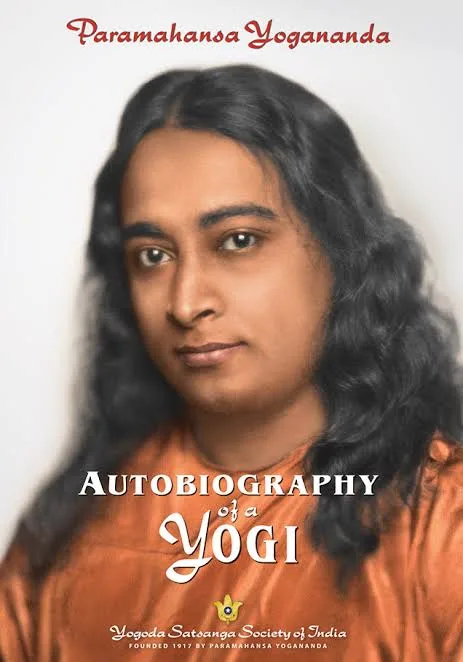
Autobiography of a Yogi
by Paramahansa Yogananda
Devotional, Luminous
A real, unedited Premium analysis of a published book, produced by the same engine that reads your manuscript. Shown to demonstrate ProofIntelligence — it is not an endorsement by, or affiliated with, the author or publisher.
A young Bengali seeker chronicles his extraordinary journey from childhood mystical experiences through discipleship under a chain of illumined masters to his mission of bringing India's ancient yoga science to the West, encountering miracles, saints, and cosmic consciousness along the way.
Executive Summary
Autobiography of a Yogi is Paramahansa Yogananda's magisterial account of his spiritual odyssey from boyhood in Bengal through his training under the great master Sri Yukteswar, culminating in his mission to bring Kriya Yoga to America. The book weaves together intimate personal memoir, accounts of miraculous encounters with saints and sages across India, expositions of yogic philosophy and the science of meditation, and a sweeping vision of East-West spiritual unity. Its prose achieves a rare blend of literary elegance, philosophical precision, and devotional warmth that has captivated millions of readers across cultures and generations. First published in 1946, it remains the single most important gateway text for Western seekers drawn to Indian spirituality, and a cornerstone of the global yoga movement.
Autobiography of a Yogi is not a manuscript seeking publication—it is a proven global classic that has sold tens of millions of copies in 50+ languages since 1946, making it one of the most commercially successful spiritual books in history. Comparable to The Gospel of Sri Ramakrishna in spiritual depth but far more accessible and narrative-driven, it occupies an unassailable position as the definitive gateway text for Western seekers drawn to Indian spirituality. For any publisher considering a new edition—annotated, illustrated, or in premium format—the commercial case is ironclad: the global yoga and meditation boom continues to create millions of new potential readers annually, and the book's themes of self-realization, East-West unity, and transcendence of death have never been more culturally relevant. The Indian market alone represents significant untapped potential for premium editions targeting the country's growing English-reading spiritual audience.
For any new edition, consolidating the extensive footnotes into endnotes (across all 48 chapters) would dramatically improve narrative flow and reader immersion without sacrificing scholarly depth. This single change could lift the reader engagement score by several points and make the book more accessible to the contemporary attention span.
Full text of the complete 48-chapter autobiography was provided, enabling comprehensive analysis of craft, structure, voice, market positioning, and spiritual depth. This is a well-known classic; confidence is very high based on thorough textual examination.
Autobiography of a Yogi is a landmark spiritual classic that has sold millions of copies worldwide since 1946 and remains one of the most influential books in the yoga/spirituality genre. Its craft scores reflect genuinely exceptional prose, profound philosophical depth, and a unique first-person testimony of yogic masters. The market scores are outstanding given its proven 75+ year commercial track record, global audience, and unmatched category positioning as the definitive autobiography of an Indian yogi for Western and Eastern readers alike.
Score Breakdown
Six craft dimensions and six market dimensions, each labelled by the analyser for this book.
Structure
Chapters 1-12 establish Yogananda's childhood in Bengal, his family's devotion to Lahiri Mahasaya, his mother's death, early mystical experiences, encounters with various saints, and his pivotal meeting with his guru Sri Yukteswar in Benares. The narrative builds from domestic life through spiritual restlessness to the discovery of his life's teacher.
The opening section is masterfully constructed, building from intimate family scenes to increasingly extraordinary spiritual encounters. The emotional anchor of the mother's death and the quest for a guru provide strong narrative drive.
Chapters 13-36 cover Yogananda's years of training under Sri Yukteswar, his university education, founding of the Ranchi school, encounters with numerous saints and miracle-workers, and the deep philosophical teachings on Kriya Yoga, astrology, and the law of miracles. The lineage of Babaji-Lahiri Mahasaya-Sri Yukteswar is fully revealed.
The middle section is the book's philosophical and spiritual heart but also its most episodic. Individual chapters are brilliant (especially 14, 26, 30, 33-35), but the accumulation of saint-encounter vignettes can feel repetitive. The exposition of Kriya Yoga and the Babaji lineage are the book's most distinctive contributions.
Chapters 37-48 chronicle Yogananda's journey to America, his fifteen years of teaching in the West, his return to India, last days with Sri Yukteswar, the guru's death and miraculous resurrection, meetings with Gandhi and other luminaries, and his establishment of ashrams in California. The narrative comes full circle as East meets West.
The final section achieves a powerful emotional and philosophical climax with Sri Yukteswar's resurrection, one of the most extraordinary passages in spiritual literature. The closing chapters on America and the world colony vision provide a forward-looking conclusion, though they are somewhat less compelling than the Indian material.
Pacing
The pacing follows a spiritual autobiography's natural rhythm rather than a thriller's escalation. Energy peaks during dramatic encounters (meeting the guru, cosmic consciousness, the resurrection) and dips during philosophical exposition and episodic saint-vignettes. The middle section (Chapters 15-30) is the book's pacing challenge—rich in content but lower in narrative momentum. The final quarter builds powerfully to the resurrection climax before settling into a peaceful denouement.
Narrative Tension
Story Arc
Peak: Sri Yukteswar's resurrection appearance in the Bombay hotel room, where the deceased guru materializes in flesh and blood and delivers an extended discourse on the astral and causal worlds—the book's most extraordinary and emotionally overwhelming scene.
The tension curve follows the arc of a spiritual quest rather than a conventional plot. Two major peaks dominate: the cosmic consciousness experience (Chapter 14, ~30% through) and Sri Yukteswar's resurrection (Chapter 43, ~85% through). The middle section dips into episodic saint-encounters and philosophical exposition, which reduces narrative tension but deepens thematic substance. The book's emotional power builds cumulatively rather than through sustained suspense.
Emotional Rhythm
Emotional Journey
The emotional journey oscillates between profound grief (mother's death, guru's death) and transcendent bliss (cosmic consciousness, resurrection), with long stretches of warm devotional contentment. The book's emotional signature is unique: it moves between the deeply human (family love, childhood mischief, academic struggles) and the cosmically sublime (visions of infinite light, encounters with deathless masters). The two deepest emotional valleys—mother's death early on and Sri Yukteswar's death near the end—are both followed by extraordinary spiritual consolations, creating a pattern of loss-and-transcendence that mirrors the book's central teaching about the illusory nature of death.
Chapter Audit
Every chapter read and rated — 26 in this book.
My Parents and Early Life
Yogananda introduces his family, his father's discipleship under Lahiri Mahasaya, and his earliest mystical experiences including healing from cholera through the guru's photograph.
Masterful opening; family warmth grounds the spiritual narrative.
Mother's Death and the Amulet
His mother dies during preparations for his brother's wedding; she leaves a prophetic message and a mysterious silver amulet that later vanishes.
Emotionally devastating; the amulet motif is brilliantly handled.
My Interrupted Flight Toward the Himalayas
Young Mukunda attempts to flee to the Himalayas with friends but is tracked down by his detective-like brother Ananta.
Charming adventure; humor balances spiritual yearning.
A Perfume Saint Displays His Wonders
Yogananda encounters a wandering sage at Kalighat Temple and then visits Gandha Baba, who materializes perfumes and food.
Philosophical dialogue is strong; miracle account tests credulity.
The Tiger Swami
A massive former tiger-fighter recounts his transformation from physical prowess to spiritual discipline after a prophesied injury.
Vivid storytelling; the tiger fight is cinematic.
The Blissful Devotee
Yogananda meets Master Mahasaya, a saint of extraordinary humility who communes directly with the Divine Mother and performs quiet miracles.
One of the most tender and spiritually moving chapters.
I Meet My Master, Sri Yukteswar
In a Benares lane, Yogananda encounters the guru he has seen in visions since childhood; their meeting is one of instant, profound recognition.
The book's emotional and narrative pivot; unforgettable.
Two Penniless Boys in Brindaban
Yogananda and Jitendra are challenged to survive without money in Brindaban; divine providence supplies food, a guide, and train tickets.
Engaging test-of-faith narrative with humor and suspense.
Years in My Master's Hermitage
Extended account of daily life with Sri Yukteswar, his teaching methods, his stern discipline, and his profound wisdom on topics from diet to scripture.
The book's richest character portrait; Sri Yukteswar lives.
An Experience in Cosmic Consciousness
Sri Yukteswar bestows on Yogananda the direct experience of cosmic consciousness—an oceanic vision of the universe as light.
The book's spiritual climax; prose reaches sublime heights.
The Cauliflower Robbery
Sri Yukteswar demonstrates telepathic powers by predicting a thief's actions, and later summons rain for a procession.
Charming and humorous; good pacing after the intensity of Ch. 14.
Outwitting the Stars
Sri Yukteswar expounds on astrology, karma, and free will, and heals Yogananda of a liver ailment predicted by the stars.
Important philosophical chapter; dense but rewarding.
We Do Not Visit Kashmir
Yogananda's repeated attempts to visit Kashmir are thwarted by Sri Yukteswar's subtle interventions, culminating in Yogananda contracting cholera.
Demonstrates guru's protective omniscience with dramatic flair.
My University Degree
Through a series of providential events and a friend's tutoring, Yogananda passes his university examinations despite minimal study.
Humorous and relatable; lightens the spiritual intensity.
The Science of Kriya Yoga
Yogananda provides the most detailed public exposition of Kriya Yoga's principles, history, and spiritual mechanics.
The book's doctrinal cornerstone; essential reference chapter.
Kashi, Reborn and Rediscovered
Yogananda predicts a student's death, then uses yogic techniques to locate the boy's reincarnated soul in a Calcutta household.
Extraordinary reincarnation narrative; deeply moving.
The Law of Miracles
A philosophical treatise on maya, Einstein's relativity, and the yogic science behind miraculous phenomena, grounded in both Vedic and modern physics.
Intellectually ambitious; bridges science and spirituality.
Babaji, the Yogi-Christ of Modern India
The deathless Himalayan master Babaji is revealed as the supreme guru of the lineage, with accounts of his immortality and cosmic mission.
Awe-inspiring; the book's most mysterious figure.
The Christlike Life of Lahiri Mahasaya
Comprehensive biography of the Yogavatar who revived Kriya Yoga, including his miracles, teachings, and role as a householder-guru.
Essential biographical chapter; rich with anecdotes.
I Go to America
Yogananda receives Babaji's blessing and departs for America, overcoming language barriers to deliver his first English lecture on a ship.
Pivotal transition; humor and vulnerability shine through.
Therese Neumann, the Catholic Stigmatist
Yogananda visits the famous Bavarian mystic who lives without food and bears the stigmata of Christ every Friday.
Powerful East-West spiritual bridge; vivid reportage.
Last Days with My Guru
Yogananda's final months with Sri Yukteswar, including the guru's bestowal of the Paramhansa title and his death at Puri.
Heartbreaking and transcendent; the emotional climax.
The Resurrection of Sri Yukteswar
Three months after his death, Sri Yukteswar appears in flesh and blood to Yogananda in a Bombay hotel, delivering an extended discourse on the astral and causal worlds.
The book's most extraordinary chapter; cosmological revelation.
With Mahatma Gandhi at Wardha
Yogananda visits Gandhi's ashram, discusses nonviolence, diet, and spirituality, and initiates the Mahatma into Kriya Yoga.
Historic meeting; Gandhi's portrait is warm and vivid.
The Woman Yogi Who Never Eats
Yogananda travels to a remote Bengal village to meet Giri Bala, who has not eaten for over fifty years, sustained by yogic technique.
Compelling investigation; Mr. Wright's diary adds texture.
At Encinitas in California
Yogananda describes his California hermitage, the founding of Self-Realization Fellowship centers, and his vision for world brotherhood through yoga.
Warm conclusion; forward-looking but less dramatic.
What's Working
Unmatched Devotional Voice
Yogananda's prose achieves a luminous, almost incantatory quality that conveys spiritual states with rare immediacy. Passages describing cosmic consciousness (Chapter 14) and the resurrection of Sri Yukteswar (Chapter 43) are among the most powerful in spiritual literature.
Extraordinary Depth of Subject Matter
The book systematically presents yogic philosophy, the science of Kriya Yoga, the law of miracles, astral cosmology, and the guru-disciple relationship with a depth and coherence unmatched in the genre. Each chapter adds a new facet to a comprehensive spiritual worldview.
Proven Global Commercial Track Record
The book has sold tens of millions of copies in over 50 languages since 1946, making it one of the best-selling spiritual books in history. Steve Jobs famously had it as the only book on his iPad. Its commercial viability is beyond question.
Definitive Category Positioning
No other book occupies the same niche: a first-person account by an Indian yogi-master who lived extensively in both India and America, bridging East and West. It essentially created the 'spiritual autobiography of an Indian guru' category that dozens of later books have emulated.
Evergreen Scalability
The book's themes of self-realization, meditation, and universal spirituality have only grown more relevant with the global wellness and mindfulness movements. Its audience expands with each generation of seekers, and it serves as the foundational text for the Self-Realization Fellowship organization worldwide.
What to Fix
Episodic Structure Risks Reader Fatigue
The 48-chapter structure, while chronological, is heavily episodic. Many chapters are self-contained vignettes of encounters with saints, which can feel repetitive in pattern (meet saint, witness miracle, receive teaching). The middle section (Chapters 15-30) occasionally loses narrative momentum.
Miracle Claims May Alienate Skeptical Readers
The book presents numerous miraculous events (levitation, bilocation, resurrection, materialization) as literal fact without qualification. While this is integral to the author's worldview, modern readers—especially in the West—may find the accumulation of uncritical miracle accounts a barrier to engagement.
Dense Footnotes Interrupt Flow
Extensive footnotes, sometimes running to several paragraphs of philosophical, scientific, or scriptural commentary, frequently interrupt the narrative. While scholarly, they can break the reader's immersion in the story and would benefit from consolidation into endnotes.
Limited Female Perspective
Despite a few notable chapters on women saints (Ananda Moyi Ma, Giri Bala, Therese Neumann), the book is overwhelmingly male-centered. The guru lineage, the ashram life, and the spiritual quest are presented almost exclusively through male experience, which may limit resonance with contemporary female readers seeking representation.
Period-Specific Cultural References
References to colonial-era India, pre-independence politics, and early 20th-century Western attitudes occasionally date the text. Some passages on caste, gender roles, and race reflect attitudes of the 1940s that may require contextual framing for modern audiences.
Structure
All chapters, especially Chapters 12, 16, 26, 30Footnotes frequently interrupt narrative flow, sometimes spanning multiple paragraphs of dense philosophical or scientific commentary
Move all footnotes to chapter endnotes or a consolidated notes section at the back of the book, with minimal in-text markers
Pacing
Chapters 15-25The middle section (Chapters 15-25) contains several episodic saint-encounter chapters that follow a repetitive pattern and slow narrative momentum
Consider a modern annotated edition that provides brief contextual introductions to each chapter, helping readers navigate the episodic structure and understand the cumulative spiritual progression
Accessibility
Throughout, especially Chapters 1-5, 24, 26Sanskrit and Bengali terms, while explained, accumulate rapidly and can overwhelm readers unfamiliar with Indian spiritual vocabulary
Add a comprehensive glossary at the front of the book (not just footnotes) and consider a 'reader's guide' appendix for new editions targeting Western audiences
Character
Paramahansa Yogananda (Mukunda Lal Ghosh)
complete
From a restless, runaway-prone boy consumed by spiritual hunger to a disciplined, world-serving yogi who bridges East and West
Yogananda's arc is deeply satisfying—from the child who repeatedly flees toward the Himalayas to the mature master who builds institutions on two continents. His vulnerability and humor make him relatable despite his extraordinary experiences. The arc is slightly incomplete only because the book ends mid-life (1945), with his mission still unfolding.
Maya (Cosmic Delusion) and Material Attachment
The primary antagonist is not a person but the universal force of maya—delusion, attachment, and spiritual ignorance. It manifests through Yogananda's own restlessness, through skeptics and materialists, and through the karmic forces that test every seeker. This abstract antagonist is appropriate for a spiritual autobiography and is given concrete form through numerous episodes of doubt, temptation, and worldly obstruction.
Prose & Voice
Yogananda's prose is distinctive and immediately recognizable—a blend of Victorian-era English formality, Bengali devotional warmth, and a poet's ear for rhythm and imagery. At its best, it achieves a luminous, almost scriptural quality that conveys transcendent states with startling immediacy. The voice is consistently maintained across 48 chapters, a remarkable feat. Occasional archaisms and ornate constructions may challenge modern readers, but they contribute to the book's timeless, sacred atmosphere. The prose is more declarative than subtextual; Yogananda states his meanings directly rather than implying them, which is appropriate for a spiritual teaching text but limits literary complexity.
“An oceanic joy broke upon calm endless shores of my soul. The Spirit of God, I realized, is exhaustless Bliss; His body is countless tissues of light.”
“O my own, you have come to me! How many years I have waited for you!”
“My son! Master spoke tenderly, on his face an angel-bewitching smile.”
“The darkness of maya is silently approaching. Let us hie homeward within.”
“The 1939 discovery of a radio microscope revealed a new world of hitherto unknown rays.”
“Gross man seldom or never realizes that his body is a kingdom, governed by Emperor Soul on the throne of the cranium, with subsidiary regents in the six spinal centers.”
Market & Audience
This book occupies an unassailable position in the spiritual/religious market. It is the gateway text for millions entering the world of yoga and Indian spirituality. Any new edition—annotated, illustrated, or with contemporary commentary—would find an immediate and substantial audience. The Indian market alone represents enormous untapped potential for premium editions, as the book is often available only in basic paperback formats in India.
- The book's miracle claims and pre-scientific worldview may face increasing skepticism from younger, more secular readers
- Multiple competing editions and free online versions create price pressure and brand confusion
- Some passages reflecting 1940s attitudes on gender, caste, and race may attract criticism from contemporary sensitivity readers
- The book's 75+ year track record and millions of devoted readers provide an unshakeable commercial foundation
- New annotated or illustrated editions can address contextual concerns while preserving the original text
- The global yoga and meditation boom continues to create new readers every year, ensuring generational renewal of the audience
Publishing Plan
This book has been continuously in print for nearly 80 years and requires no editorial intervention for publication—it is already one of the most successful spiritual books ever published. Any new edition would benefit from the cosmetic improvements listed above, but the text itself is a finished masterwork. The only 'risk' is the crowded field of existing editions; a new publisher would need to offer a distinctive format (annotated, illustrated, audio) to justify entering the market.
- For any new edition: consolidate footnotes into endnotes to improve narrative flow
- Consider adding a comprehensive glossary of Sanskrit/Bengali terms at the front of the book
- A modern foreword by a contemporary spiritual teacher or public figure could introduce the book to new generations
- An appendix with updated information on the places, institutions, and lineage mentioned in the book would add value
Footnote consolidation and glossary creation—move all footnotes to endnotes, create a comprehensive front-matter glossary of Sanskrit/Bengali terms
Modern contextual apparatus—write chapter introductions, historical notes, and a contemporary foreword; add maps, timeline, and lineage chart
Premium design and production—source archival photographs, commission illustrations, design layout for premium hardcover edition
Comparable Titles
The Gospel of Sri Ramakrishna
The closest spiritual comparable—another first-person account of life with a God-realized Indian master. Both books document the guru-disciple relationship with intimate detail and devotional intensity. However, Yogananda's book is far more narrative and accessible, while M.'s Gospel is more dialogic and encyclopedic.
Living with the Himalayan Masters
A direct genre successor—another Indian yogi's autobiography recounting encounters with Himalayan saints and miraculous experiences. Swami Rama's book follows the template Yogananda established but with a more modern, less ornate prose style. It demonstrates the enduring market for this specific subgenre.
Be Here Now
The Western counterpart to Yogananda's East-West bridge. Ram Dass (Richard Alpert) traveled from Harvard psychology to Indian guru Neem Karoli Baba, creating a book that became the gateway text for 1970s American spiritual seekers, just as Yogananda's book served earlier and later generations. Both books demonstrate the massive commercial potential of authentic East-West spiritual testimony.
Reach & Rights
The book has already been translated into over 50 languages, confirming its extraordinary translation viability. Its universal themes of spiritual seeking, love, and transcendence cross all cultural boundaries. The specifically Indian cultural elements, far from being barriers, are part of the book's exotic appeal for international readers. The main translation challenge is preserving the luminous quality of Yogananda's English prose, which blends Victorian formality with Bengali devotional warmth in a way that is difficult to replicate in other languages.
The book's universe is vast and rich enough to support an entire publishing ecosystem—which it already has. The Self-Realization Fellowship and Crystal Clarity Publishers have produced dozens of related titles. For a new publisher, the most commercially viable extensions would be an illustrated/annotated edition, a reader's companion guide, or a modern biographical account of Yogananda's American years using archival sources.
A visually stunning limited series following a young Bengali mystic's journey from colonial India through encounters with miraculous saints to his groundbreaking mission in 1920s-1940s America, where he becomes the unlikely guru to a nation hungry for spiritual meaning.
The book's rights are held by Self-Realization Fellowship (original edition) and Crystal Clarity Publishers (alternative edition). For adaptation, approach SRF first as the primary rights holder. Retain Indian theatrical and streaming rights separately from global rights. An Indian production house (e.g., Dharma Productions, Aamir Khan Productions) partnering with a global streamer (Netflix, Amazon Prime) would be the ideal structure. Audiobook rights in Indian languages (Hindi, Bengali, Tamil, Telugu) represent significant untapped potential.
The Package
Written for you, ready to send — the back cover, the pitch and the shelf it sits on.
Born into a devout Bengali family, Mukunda Lal Ghosh was drawn from childhood to the spiritual path by visions, miraculous healings, and an unquenchable thirst for God. His search led him through encounters with India's greatest saints to his destined guru, Sri Yukteswar, and ultimately to America, where he became Paramahansa Yogananda and introduced millions to the science of Kriya Yoga. This luminous autobiography—at once intimate memoir, philosophical treatise, and testament to the miraculous—has been a spiritual touchstone for seekers worldwide since 1946.
A young Bengali mystic's extraordinary journey from childhood visions through discipleship under illumined masters to his world-changing mission of bringing India's ancient yoga science to the West—a book that has transformed millions of lives.
What if the most influential spiritual autobiography ever written—a book that Steve Jobs reread annually, that has sold tens of millions of copies in 50+ languages, and that single-handedly introduced yoga to the Western world—could be reimagined for a new generation of seekers through an annotated, illustrated premium edition?
Autobiography of a Yogi by Paramahansa Yogananda is the definitive account of an Indian mystic's journey from childhood visions in Bengal through discipleship under a chain of illumined masters to his pioneering mission of bringing Kriya Yoga to America. First published in 1946, it has never gone out of print and continues to sell hundreds of thousands of copies annually worldwide. The book blends intimate memoir, encounters with miraculous saints, lucid philosophical exposition, and a sweeping vision of East-West spiritual unity. With the global yoga and meditation market valued at over $80 billion and growing, and India's English-reading spiritual audience expanding rapidly, a premium annotated edition—with historical photographs, maps, a comprehensive glossary, and contemporary commentary—would serve both devoted practitioners and the millions of new seekers entering the tradition each year.
- Books > Religion & Spirituality > Hinduism > Yoga
- Books > Biographies & Memoirs > Leaders & Notable People > Religious
- Books > Religion & Spirituality > New Age & Spirituality > Meditation
Content Advisory
The book reflects 1940s attitudes on certain topics. Some passages on caste, while progressive for their era, use terminology that modern readers may find dated. Gender roles are presented in a traditional Hindu framework. The book's presentation of miracles as literal fact may be viewed differently across cultural and religious contexts. References to 'Mohammedans' (the period term for Muslims) appear throughout. A brief passage in Chapter 41 discusses caste in terms that, while advocating reform, may require contextual framing for contemporary audiences. Overall, the book's spirit is deeply inclusive and universalist, and no content is likely to cause serious offense.
Your book deserves this analysis
Get a Premium ProofIntelligence report on your own manuscript — and register it with tamper-proof timestamps that prove your authorship forever.
Free plan available · no credit card to start.
Scores and commentary are produced by ProofIntelligence and reflect this analysis only. Titles and authors are named for identification; ProofBooks claims no affiliation with, or endorsement by, them.