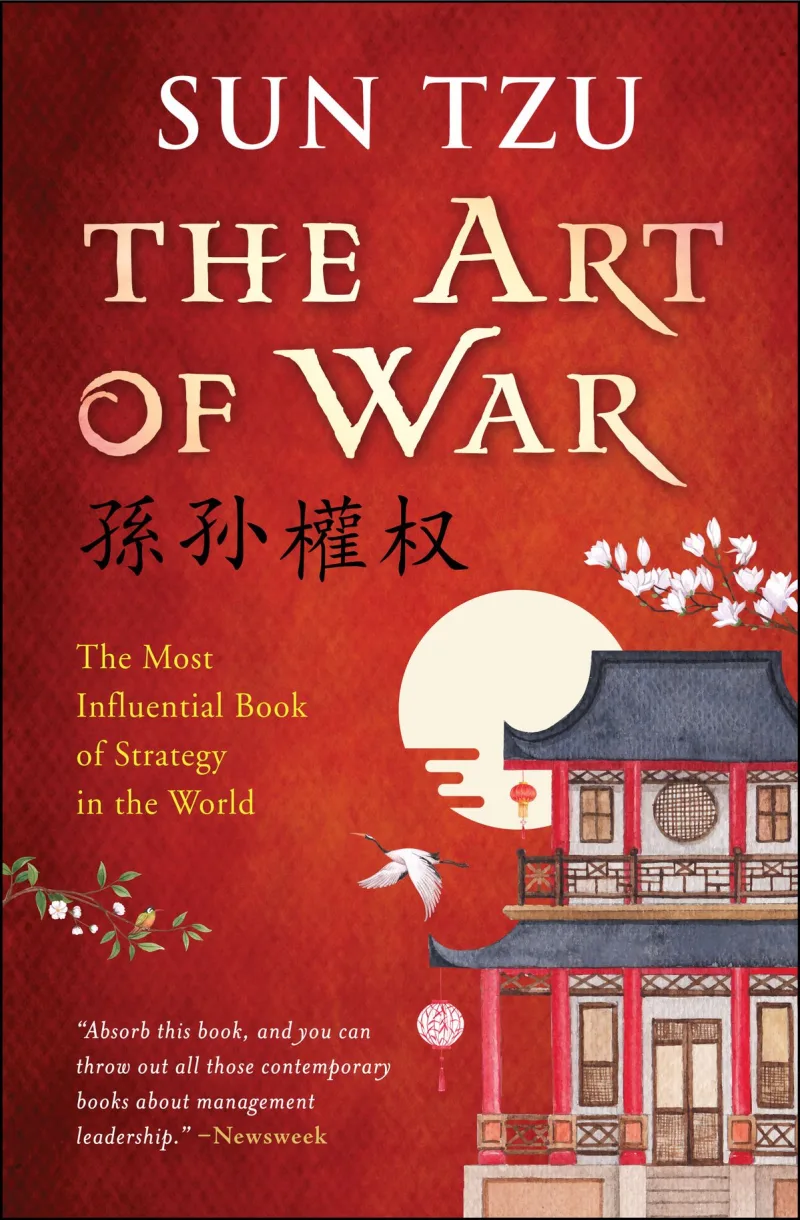
The Art of War
by Sun Tzu
Authoritative, Aphoristic
A real, unedited Premium analysis of a published book, produced by the same engine that reads your manuscript. Shown to demonstrate ProofIntelligence — it is not an endorsement by, or affiliated with, the author or publisher.
The oldest military treatise in the world distills 2,500 years of strategic wisdom into thirteen concise chapters that reveal how to win conflicts — on the battlefield, in the boardroom, and in life — through preparation, deception, adaptability, and the supreme art of winning without fighting.
Executive Summary
Sun Tzu's Art of War remains one of the most influential strategic texts ever written — a 2,500-year-old treatise whose principles on planning, deception, adaptability, and winning without fighting have become foundational to modern business strategy education. Lionel Giles' 1910 translation is scholarly and authoritative, preserving the aphoristic power of the original while maintaining academic rigour. However, as a standalone commercial product in the Indian market, this edition faces severe challenges: extreme market saturation, archaic prose style, insufficient length, and zero differentiation from dozens of competing editions. To succeed commercially, this edition urgently needs substantial Indian business commentary, modernised language, and supplementary frameworks that transform it from a public-domain reprint into a distinctive strategic resource for Indian professionals.
Sun Tzu's Art of War needs no introduction — it's the world's most influential strategy text, selling millions of copies annually across business, military, and self-help categories. This Lionel Giles translation is scholarly and authoritative, but as a standalone commercial product it's a commodity reprint competing against 20+ existing Indian editions from Penguin, Fingerprint, and Jaico. The acquisition case depends entirely on the editorial value-add: with 40,000 words of Indian business commentary (think Devdutt Pattanaik meets Robert Greene), end-of-chapter strategy exercises, and premium design, this could be positioned as 'The Art of War: Indian Business Edition' at ₹499-₹599, targeting the 4,000+ business school market and India's 50 million+ management professionals. Without that investment, pass — the market doesn't need another bare-bones Art of War reprint.
Add 30,000-40,000 words of Indian business commentary and case studies — one per chapter — connecting Sun Tzu's principles to Indian corporate strategy (e.g., Jio's market disruption as 'Attack by Stratagem,' TATA's patient positioning as 'Tactical Dispositions'). This single addition would transform the edition from a commodity public-domain reprint into a differentiated product worth ₹399-₹599.
Full text of the complete 13-chapter treatise provided with Lionel Giles' 1910 translation, including introduction. This is a well-known classical text, allowing for highly confident assessment of craft, structure, and market positioning.
Sun Tzu's Art of War is one of the most influential strategic texts ever written, with enduring relevance across military, business, and personal strategy domains. However, as a 1910 translation entering a market already saturated with dozens of competing editions, this specific edition's commercial differentiation is limited without significant new editorial apparatus, commentary, or contemporary application framework.
Score Breakdown
Six craft dimensions and six market dimensions, each labelled by the analyser for this book.
Structure
The introduction establishes Sun Tzu's historical credibility through the famous anecdote of drilling the King's concubines, demonstrating his philosophy that authority must be backed by action. Chapter 1 (Laying Plans) sets out the five constant factors governing warfare and introduces the foundational principle that all warfare is based on deception.
The opening is masterful — the anecdote is one of the most memorable in strategic literature, immediately establishing credibility and stakes. Chapter 1 efficiently lays the conceptual groundwork for everything that follows.
Chapters 4 through 9 form the tactical and operational core, moving from defensive positioning (Tactical Dispositions) through energy management, exploitation of weak points, manoeuvring, tactical variation, and army logistics. The text builds from abstract principles to increasingly specific operational guidance, with each chapter adding a new dimension to the strategic framework.
The middle section is dense with actionable wisdom but maintains engagement through vivid metaphors (water, falcons, crossbows). The progression from theory to practice is logical and well-paced, though some chapters (8, 9) become more list-like and less conceptually rich.
Chapters 11-13 address the most complex and high-stakes scenarios: the nine varieties of ground, the use of fire as a weapon, and the critical role of espionage. The text culminates with the argument that intelligence — foreknowledge obtained through spies — is the ultimate strategic advantage.
The ending is strategically brilliant, saving the most sophisticated and morally complex material (espionage, manipulation) for last. The final chapter on spies feels surprisingly modern and provides a powerful conclusion that reframes everything preceding it.
Pacing
The pacing follows a wave pattern with high-energy openings (the concubine anecdote) and closings (espionage chapter), with a notable dip in the middle chapters (8-9) where the text becomes more list-oriented and less conceptually dynamic. The strongest energy comes from chapters with vivid metaphors and bold philosophical claims.
Narrative Tension
Story Arc
Peak: Chapter 3's declaration that 'supreme excellence consists in breaking the enemy's resistance without fighting' — the single most influential strategic insight in the entire treatise, which reframes the entire purpose of strategy from destruction to domination through superior positioning.
The tension curve follows a distinctive pattern for a philosophical treatise: high dramatic tension in the introduction (the concubine anecdote), a peak philosophical insight early (winning without fighting in Chapter 3), a gradual dip through the more tactical middle chapters, and a strong recovery in the final chapters dealing with desperate situations and espionage. The text sustains intellectual tension through the cumulative weight of its insights rather than through narrative suspense.
Emotional Rhythm
Emotional Journey
The emotional journey is primarily intellectual rather than visceral. The reader experiences peaks of awe and revelation when encountering Sun Tzu's most powerful insights (winning without fighting, the water metaphor for strategy), punctuated by stretches of denser, more list-oriented material that can feel tedious. The opening anecdote provides the only true narrative emotional engagement; thereafter, the emotional register is predominantly contemplative and analytical, with the closing chapters on espionage restoring a sense of gravity and respect.
Chapter Audit
Every chapter read and rated — 14 in this book.
Introduction
Historical anecdote of Sun Tzu drilling the King's concubines establishes his authority and philosophy.
One of history's most memorable leadership demonstrations.
Laying Plans
Establishes the five constant factors of warfare and the principle that all warfare is based on deception.
Foundational chapter; every sentence carries weight.
Waging War
Argues for speed over prolonged campaigns and details the economic costs of warfare.
Economic analysis of war remains strikingly relevant.
Attack by Stratagem
Introduces the supreme principle: winning without fighting is the highest form of generalship.
Contains the treatise's most famous and powerful idea.
Tactical Dispositions
Discusses defensive positioning and the principle that victory comes from making no mistakes.
Subtler chapter; rewards careful re-reading.
Energy
Uses vivid metaphors to explain the interplay of direct and indirect tactics.
Metaphors of music, colour, and taste are brilliant.
Weak Points and Strong
The longest chapter details how to exploit enemy weaknesses and maintain strategic flexibility.
Water metaphor for strategy is iconic and timeless.
Manoeuvring
Covers the art of tactical movement, morale management, and the artifice of deviation.
Practical but occasionally list-heavy in structure.
Variation in Tactics
Brief chapter on flexibility and the five dangerous faults of a general.
Shortest chapter; feels slightly underdeveloped.
The Army on the March
Detailed guide to reading terrain, enemy signals, and managing troops on campaign.
Most tactical chapter; dense with observational wisdom.
Terrain
Classifies six types of terrain and six calamities arising from leadership failures.
Strong leadership insights embedded in terrain analysis.
The Nine Situations
The longest and most complex chapter covers nine varieties of ground and deep strategic psychology.
Shuai-jan snake metaphor is masterful strategic thinking.
The Attack by Fire
Covers fire tactics and concludes with a powerful warning against fighting from anger.
Fire tactics dated; closing wisdom on restraint is timeless.
The Use of Spies
Classifies five types of spies and argues intelligence is the supreme strategic advantage.
Surprisingly modern; elevates information as ultimate weapon.
What's Working
Timeless Strategic Framework
The thirteen chapters create a comprehensive strategic system that has remained relevant for 2,500 years. Concepts like 'all warfare is based on deception' and 'supreme excellence consists in breaking the enemy's resistance without fighting' are as applicable to modern business as to ancient warfare.
Aphoristic Power
Nearly every paragraph contains a quotable maxim. Lines like 'If you know the enemy and know yourself, you need not fear the result of a hundred battles' have become foundational texts in business education worldwide.
Logical Structural Progression
The text moves from abstract principles (planning, economics) through tactical operations to advanced strategy (espionage), creating a natural learning curve that mirrors how strategic thinking actually develops.
Perennial Market Demand
The Art of War consistently ranks among the top-selling strategy and business books globally. In India, the management education market of 4,000+ business schools creates a built-in institutional demand.
Cross-Category Appeal
The book sells simultaneously in military history, business strategy, self-help, philosophy, and classics categories, giving it multiple discovery pathways and audience segments that few single titles can match.
What to Fix
Severe Market Saturation
At least 15-20 editions of The Art of War are currently available in the Indian market from major publishers. Without a distinctive editorial angle, this edition has no clear reason to exist commercially.
Archaic Translation Style
Giles' 1910 prose, while scholarly, uses constructions like 'hearkens to my counsel' and 'Ho Lu saw that Sun Tzu was one who knew how to handle an army' that feel stilted to modern Indian readers accustomed to contemporary business prose.
Insufficient Length for Standalone Publication
At approximately 15,000 words, the core text is too short for a standard trade paperback. Without substantial supplementary material (commentary, case studies, exercises), the book feels thin and difficult to price competitively.
Limited Pacing Variety
The relentless aphoristic style, while powerful, creates a monotonous reading rhythm. There are no narrative breaks, case studies, or extended examples to provide cognitive relief — a significant gap compared to modern business books.
No Indian Contextualisation
This edition makes no attempt to connect Sun Tzu's principles to Indian business, military history, or cultural context. Indian readers seeking strategic wisdom may prefer editions of Chanakya's Arthashastra or annotated versions with Indian case studies.
Content Differentiation
All chaptersThe text is a straight reprint of a public domain translation with no unique editorial value
Commission chapter-by-chapter commentary applying each principle to Indian business contexts, with real case studies from companies like Infosys, Reliance, Flipkart, and Zomato
Language Modernisation
ThroughoutGiles' 1910 prose uses archaic constructions that create unnecessary friction for modern readers
Either lightly modernise the translation (since it's public domain) or provide a parallel modern paraphrase alongside the original text, preserving scholarly integrity while improving accessibility
Structural Enhancement
End of each chapterThe book lacks the supplementary apparatus modern readers expect — no exercises, frameworks, or application tools
Add end-of-chapter 'Strategy Exercises' with reflection questions and a concluding 'Sun Tzu Strategy Canvas' framework that readers can apply to their own business challenges
Introduction Expansion
IntroductionThe introduction is a single historical anecdote without context for why this text matters today
Write a 3,000-word modern introduction covering Sun Tzu's influence on business strategy, his relevance to Indian entrepreneurship, and how to read the text for maximum practical benefit
Visual Design
All chaptersPure text format with no visual elements makes the book feel like a commodity reprint
Add strategic diagrams, infographics summarising key frameworks (the Five Factors, Nine Situations), and chapter-opening illustrations to create a premium reading experience
Prose & Voice
“Hence to fight and conquer in all your battles is not supreme excellence; supreme excellence consists in breaking the enemy's resistance without fighting.”
“If you know the enemy and know yourself, you need not fear the result of a hundred battles.”
“Military tactics are like unto water; for water in its natural course runs away from high places and hastens downwards. So in war, the way is to avoid what is strong and to strike at what is weak.”
“Let your rapidity be that of the wind, your compactness that of the forest. In raiding and plundering be like fire, in immovability like a mountain.”
“The King is only fond of words, and cannot translate them into deeds.”
“The general that hearkens to my counsel and acts upon it, will conquer: let such a one be retained in command!”
“Contributing to maintain an army at a distance causes the people to be impoverished.”
“The preparation of mantlets, movable shelters, and various implements of war, will take up three whole months; and the piling up of mounds over against the walls will take three months more.”
Market & Audience
The Art of War is a perennial bestseller globally, but the Indian market already has multiple editions available from major publishers. This Giles translation, while scholarly and authoritative, competes against more modern translations and annotated business editions. To succeed commercially in India, this edition needs a distinctive value proposition — perhaps pairing Sun Tzu with Chanakya, adding Indian business case studies, or creating a visually premium gift edition.
- Extreme market saturation — dozens of Art of War editions already available in India from major publishers including Penguin, Fingerprint, and Jaico
- Public domain text means zero barrier to entry for competitors; any publisher can release their own edition
- The 1910 Giles translation uses archaic British English that may feel dated to contemporary Indian readers
- Short text length (approximately 15,000 words) makes it difficult to justify premium pricing without supplementary material
- Add substantial Indian business commentary, case studies from Indian corporate history (Tata, Reliance, Infosys) to differentiate
- Create a premium illustrated or gift edition with original artwork to justify higher price point
- Pair with Chanakya's Arthashastra for a unique 'Eastern Strategy Masters' compilation targeting the Indian market
- Develop a companion workbook or online course to create a value ecosystem beyond the book itself
Publishing Plan
As a straight reprint of the 1910 Giles translation, this manuscript is not ready for commercial submission to Indian publishers — it would be rejected as an undifferentiated public domain text. However, the underlying content is among the strongest strategic writing ever produced. With substantial editorial enhancement (Indian commentary, modern introduction, exercises, visual elements), this could become a compelling and differentiated product. The risk is medium: the brand recognition of 'The Art of War' guarantees baseline interest, but the saturated market demands genuine differentiation.
- Add 30,000-40,000 words of original Indian business commentary to differentiate from 20+ competing editions
- Write a substantial modern introduction (3,000-5,000 words) establishing relevance to Indian business context
- Modernise or annotate archaic language constructions throughout the Giles translation
- Develop end-of-chapter exercises, reflection questions, and a concluding strategy framework
- Commission professional illustrations or infographics for key strategic concepts
Write Indian business commentary — 13 case studies (one per chapter, 2,500 words each) connecting Sun Tzu's principles to Indian corporate strategy. This is the single highest-leverage addition that transforms the product from commodity to differentiated.
Develop supplementary apparatus — modern introduction (3,000 words), end-of-chapter strategy exercises, glossary of ancient Chinese terms, and the 'Sun Tzu Strategy Canvas' concluding framework. Light modernisation of archaic language throughout.
Professional polish — commission cover design, interior layout with infographics/diagrams, professional copyedit of all new material, and prepare submission package for target publishers.
Comparable Titles
The 48 Laws of Power
The most successful modern application of ancient strategic wisdom to contemporary power dynamics. Greene's approach of pairing historical anecdotes with strategic principles is exactly the editorial model this Art of War edition should emulate — each of Sun Tzu's 13 chapters could be expanded with Indian business case studies in Greene's style.
Chanakya's Arthashastra (various editions)
The Indian strategic tradition's equivalent of The Art of War. Multiple successful Indian editions (by Penguin, Rupa, and others) demonstrate strong market demand for ancient Eastern strategic wisdom applied to modern business. A combined Sun Tzu + Chanakya edition would be uniquely positioned in the Indian market.
The Book of Five Rings
The Japanese martial strategy classic that, like The Art of War, has been successfully repositioned as a business strategy text. Its shorter length and aphoristic style make it a natural companion volume, and its commercial success in India (multiple editions from Fingerprint and Penguin) validates the market for Eastern strategy classics.
Reach & Rights
The Art of War is already one of the most translated texts in human history, available in virtually every major language. The universal themes of strategy, leadership, and competitive advantage transcend cultural boundaries. For the Indian market specifically, translations into Hindi, Tamil, Telugu, and other regional languages represent significant untapped potential, particularly if paired with Indian business commentary. The key barrier is not cultural but competitive — ensuring any new translation offers genuine value over existing editions.
The series potential is significant not because the original text needs sequels, but because its brand recognition and conceptual framework are infinitely expandable into applied contexts. The Indian market is particularly receptive to this approach, as evidenced by the success of multiple Chanakya-branded business books. A well-executed 'Sun Tzu for Indian Business' series could sustain 4-6 titles.
A brilliant but ruthless ancient Chinese strategist must prove his theories of war are more than philosophy when a skeptical king forces him to transform palace concubines into disciplined soldiers — and the cost of failure is his own head.
Since the Giles translation is public domain, there are no translation rights to sell for the base text. The commercial value lies entirely in the original commentary and editorial apparatus. Retain all rights to the Indian business commentary. License audiobook rights to Audible India or Kuku FM. If the Indian Business Edition succeeds, license the commentary framework (not the Sun Tzu text) to publishers in Southeast Asian markets for localised versions.
The Package
Written for you, ready to send — the back cover, the pitch and the shelf it sits on.
Written 2,500 years ago by a Chinese military genius, The Art of War remains the world's most influential guide to strategic thinking. In thirteen razor-sharp chapters, Sun Tzu reveals the principles that govern every competitive encounter: how to plan, when to strike, where to position yourself, and why the greatest victory is the one won without fighting. From Fortune 500 boardrooms to startup war rooms, from military academies to sports coaching, Sun Tzu's wisdom endures because human nature — and the nature of conflict — never changes.
For 2,500 years, one text has shaped how leaders think about competition, strategy, and victory. Sun Tzu's Art of War reveals the timeless principles of winning — in battle, in business, and in life. The supreme art of war is to subdue the enemy without fighting.
What if the world's most influential strategy text — read by every Fortune 500 CEO, military commander, and competitive athlete — had never been properly contextualised for India's 50 million management professionals and 4,000+ business schools?
I am proposing THE ART OF WAR: INDIAN BUSINESS EDITION — Sun Tzu's timeless 13-chapter strategic treatise paired with original Indian business commentary connecting each principle to real corporate case studies from Reliance, Tata, Infosys, Flipkart, and Zomato. This is not another bare-bones reprint of a public domain text. Each chapter features a 3,000-word analysis applying Sun Tzu's wisdom to Indian market dynamics, end-of-chapter strategy exercises designed for MBA classrooms, and a concluding 'Sun Tzu Strategy Canvas' framework. The Art of War sells over 1 million copies annually worldwide; this edition targets India's massive and underserved management education market with the first truly Indian contextualisation of history's greatest strategy text.
- Books > Business & Economics > Management & Leadership > Strategy & Competition
- Books > History > Military > Strategy
- Books > Philosophy > Eastern > Chinese
Content Advisory
The introduction's anecdote involves the execution of two women (the King's concubines) to establish military authority — this could be flagged by sensitivity readers as normalising violence against women in service of a leadership lesson. The text also reflects ancient Chinese patriarchal and feudal assumptions throughout. A modern introduction should acknowledge these historical contexts without endorsing them. No other significant sensitivity concerns — the text is philosophical rather than graphic.
Your book deserves this analysis
Get a Premium ProofIntelligence report on your own manuscript — and register it with tamper-proof timestamps that prove your authorship forever.
Free plan available · no credit card to start.
Scores and commentary are produced by ProofIntelligence and reflect this analysis only. Titles and authors are named for identification; ProofBooks claims no affiliation with, or endorsement by, them.