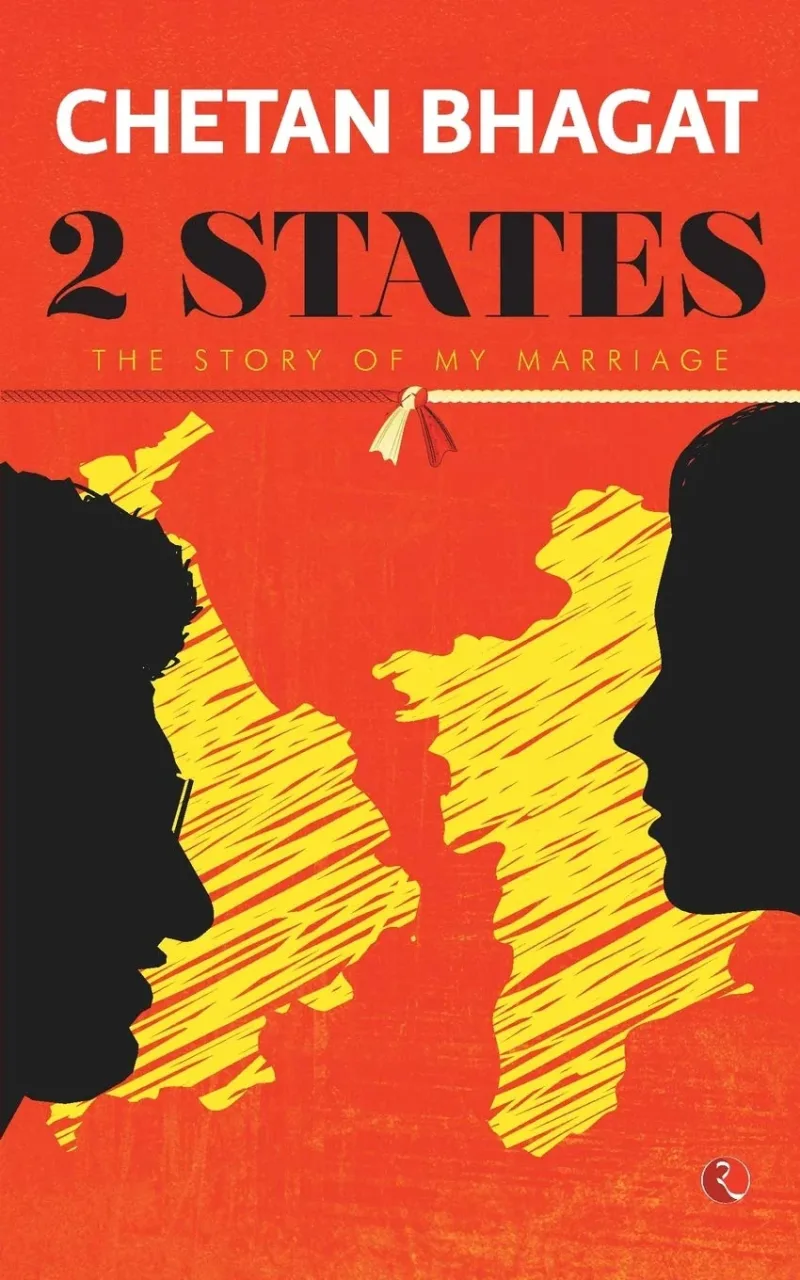
2 States
by Chetan Bhagat
Humorous, conversational, warm, self-deprecating
A real, unedited Premium analysis of a published book, produced by the same engine that reads your manuscript. Shown to demonstrate ProofIntelligence — it is not an endorsement by, or affiliated with, the author or publisher.
A Punjabi boy and a Tamil Brahmin girl who fall in love at India's top business school must win over each other's deeply prejudiced families before they can marry — one set of parents at a time.
Executive Summary
2 States follows Krish Malhotra, a Punjabi IIM Ahmedabad student, who falls in love with Tamil Brahmin classmate Ananya Swaminathan. After graduation, Krish moves to Chennai to work at Citibank and systematically wins over Ananya's family — tutoring her brother, helping her father with a career-saving presentation, and arranging a concert for her mother. When Ananya travels to Delhi, she must navigate Krish's boisterous Punjabi clan and his difficult mother. After a devastating breakup in Goa when both mothers clash, Krish's estranged father unexpectedly saves the relationship by visiting Chennai to apologize. The book's best quality is its warm, observational humor about the absurdities of Indian family life and inter-community prejudice, making a universal love story feel distinctly and authentically Indian.
2 States is a first-person romantic comedy narrated by Krish Malhotra, a Punjabi boy who falls in love with Ananya Swaminathan, a Tamil Brahmin girl, at IIM Ahmedabad. After graduating and getting placed in jobs, the couple faces the monumental task of convincing both sets of parents — his loud, prejudiced Punjabi mother and her conservative, reserved Tamil family — to accept an inter-community marriage. Krish moves to Chennai, tutors Ananya's brother, helps her father with a business presentation, and arranges a singing concert for her mother, gradually winning over the Swaminathans. Meanwhile, Ananya charms Krish's younger cousins and saves a family wedding crisis in Delhi, earning grudging acceptance from his mother. After a devastating breakup caused by clashing mothers in Goa, Krish's estranged father unexpectedly travels to Chennai to broker peace, reuniting the couple. The novel culminates in a Tamil-style wedding attended by both families, ending with the birth of twin boys who belong to "a state called India." The book is a crowd-pleasing, commercially savvy romantic comedy that uses humor to explore India's deep-rooted regional and caste prejudices.
2 States is a highly commercial Indian romantic comedy with a brilliantly simple, universally relatable premise: boy loves girl, but their families are from different states and won't agree. The book's greatest asset is its premise and audience fit — it speaks directly to the largest book-buying demographic in India (educated urban young adults) about an experience millions share. Krish's narrative voice is consistently entertaining, the cultural observations are sharp, and the emotional payoff scenes (the Raintree proposal, the concert, the father's redemption) deliver genuine feeling beneath the humor. The main editorial priorities are: (1) condensing the Citibank workplace subplot that stalls momentum in the middle third, (2) deepening Ananya beyond her 'best girl' status, and (3) a thorough copyedit. The book's treatment of cultural stereotypes is its biggest sensitivity — the humor targets both communities but occasionally crosses into casual sexism and colorism that could draw criticism. However, the theme explicitly argues against the prejudices the characters display, and the wedding speech (page 319) provides a powerful thematic resolution. With targeted editing, this is a strong commercial prospect for any major Indian publisher.
Condensing the Citibank workplace subplot (pages 99-142) by 40-50% would dramatically improve pacing and reader engagement. The banking material — Bala's management, Internet stock losses, Anil Mathur's visits — provides setting but stalls the romance. Keeping only the scenes that directly advance Krish's relationship with Ananya's family (the concert planning, the presentation help) and cutting the rest would tighten the middle act and maintain the page-turning momentum established in the Ahmedabad section.
2 States is a highly commercial, crowd-pleasing Indian romantic comedy with a brilliantly pitchable premise and a distinctive, funny narrative voice. Its greatest strengths are its premise, audience clarity, and commercial potential. Its weaknesses lie in episodic middle sections, reliance on cultural stereotypes played for laughs, and technical polish issues. The book delivers exactly what its premise promises — a warm, funny, emotionally satisfying story about love conquering family prejudice — and does so with enough craft to sustain reader engagement across its full length.
Score Breakdown
6 craft and 5 market dimensions, each scored with the evidence behind it.
The five-act structure (Ahmedabad, Delhi, Chennai, Delhi Reloaded, Goa) plus a Final Act provides clear escalation. Each act has a distinct goal: fall in love, face Delhi family, win Chennai family, win Delhi family, unite families. The Goa breakup (page 273) provides a genuine crisis, and the father's surprise intervention (page 292) delivers an earned climax. However, the middle acts in Chennai feel episodic — the Citibank subplot with Bala and the Internet stocks (pages 99-142) runs long without advancing the romance. Tightening the workplace material would raise this score.
Krish's want (marry Ananya), need (reconcile with his father), and flaw (avoidance of emotional confrontation) are present. The father backstory reveal (pages 194-197) is the novel's most powerful scene. However, Ananya remains somewhat idealized — 'best girl by popular vote' (page 9) — and her inner conflict is mostly told rather than shown. The mothers function as comic antagonists but lack dimensionality beyond their prejudices. Giving Ananya a genuine internal struggle beyond 'my parents won't agree' would deepen the character work.
Krish's first-person voice is distinctive, self-deprecating, and consistently funny: 'It's like agreeing to be near a chocolate cake and never eat it' (page 14). The humor about cultural differences is sharp — 'For Punjabis, food triggers an emotional response, like say music' (page 265). Dialogue sounds natural and differentiated between communities. However, the prose relies heavily on telling over showing, and the observational humor can become repetitive. Reducing the editorial asides about North vs. South would sharpen the voice.
The prologue's therapy-session frame (page 6) creates immediate curiosity. The 'will they or won't they' tension sustains through multiple setbacks — the Ahmedabad convocation disaster (page 60), Harish's visit (pages 143-150), the Goa breakup (page 273). The proposal scene at the Raintree restaurant (pages 216-218) is a genuine crowd-pleaser. The Chennai workplace sections (pages 99-142) slow momentum. Cutting or condensing the Citibank material would maintain the page-turning quality.
The theme is stated explicitly and effectively: 'They won't be Tamil or Punjabi. They will be Indian' (page 122). Ananya's father's wedding speech crystallizes it: 'you can also see it as a chance to love some more people' (page 319). The epilogue's 'a state called India' (page 322) lands the theme cleanly. The Guruji's forgiveness lesson (pages 198-199) adds a secondary thematic layer about letting go of parental wounds. The theme is occasionally over-stated rather than dramatized, but it is always clear.
Numerous typos and errors throughout: 'seniors has already anointed' (page 9), 'mess is up' (page 9), 'slawar kameez' (page 9), 'is aid' (page 30), 'flt' for 'felt' (page 87), 'sopeak' for 'speak' (page 43). There are duplicated paragraphs on pages 154-155. Inconsistent formatting of Tamil words and character names. The watermark 'DX @ www.desibbrg.com' appears on every page but is clearly OCR/digital artifact. A thorough copyedit pass would significantly improve this score.
The premise is brilliantly pitchable, stated on page 4: 'Boy loves Girl. Girl loves Boy. Girl's family has to love boy. Boy's family has to love girl...' The built-in conflict is universal yet culturally specific. The 'two states' concept is immediately graspable. The prologue's therapy session adds intrigue. This is one of the book's strongest dimensions — the premise practically sells itself.
The target audience is crystal clear: young urban Indians (18-35) navigating modern relationships within traditional family structures. The IIM/IIT setting, corporate job references, and inter-community marriage theme speak directly to India's educated middle class. The humor and accessible prose make it a mass-market read. The book sits squarely on the Indian commercial fiction shelf alongside similar titles. No change needed — the audience fit is excellent.
The premise taps into a massive, relatable Indian experience — inter-community marriage resistance. The IIM setting provides aspirational appeal. The humor makes it accessible across demographics. The episodic structure lends itself to adaptation. The wedding climax (pages 310-320) delivers satisfying wish-fulfillment. The workplace subplot dilutes commercial focus slightly. In the Indian English-language market, this has strong bestseller potential.
The inter-community marriage plot is a staple of Indian fiction and cinema. What distinguishes this book is the specific Punjabi-Tamil pairing and the strategy of winning over each family member individually — the 'Operation' approach. The dual-family structure where the protagonist must charm both sides is well-executed. However, character types (strict Tamil father, loud Punjabi mother, nerdy brother) are familiar archetypes. A more surprising antagonist or a less predictable resolution would raise originality.
The prologue's therapy-session frame (page 6) creates immediate curiosity. The 'will they or won't they' tension sustains through multiple setbacks — the Ahmedabad convocation disaster (page 60), Harish's visit (pages 143-150), the Goa breakup (page 273). The proposal scene at the Raintree restaurant (pages 216-218) is a genuine crowd-pleaser. The Chennai workplace sections (pages 99-142) slow momentum. Cutting or condensing the Citibank material would maintain the page-turning quality.
Structure
Acts 1-2 (Ahmedabad and Delhi): Krish and Ananya meet at IIMA, fall in love, move in together, get placed in jobs, and face the first disastrous meeting of their families at the convocation ceremony.
Key momentKrish proposes during Ananya's HLL interview (page 48), committing to the relationship publicly.
The opening is strong — the meet-cute in the mess line (page 9) is charming, the relationship escalation feels natural, and the convocation disaster (page 60) establishes the central conflict with dramatic force. The pacing is excellent through these early chapters.
Acts 3-4 (Chennai and Delhi Reloaded): Krish moves to Chennai and systematically wins over Ananya's family through tutoring, presentations, and a concert. Ananya travels to Delhi and earns acceptance by resolving a wedding crisis.
Turning pointAnanya confronts Duke at Minti's wedding (page 253), proving her worth to Krish's Punjabi relatives.
The middle is the book's longest section and its most uneven. The Chennai family-winning arc is creative and satisfying, but the Citibank workplace subplot dilutes momentum. The Delhi section is tighter and more dramatic, with the Minti wedding providing the book's best comic set-piece.
Act 5 and Final Act (Goa through Wedding): The families clash catastrophically in Goa, causing a breakup. Krish spirals into depression until his estranged father unexpectedly saves the relationship. The wedding unites both families.
ResolutionKrish's father travels to Chennai to apologize to Ananya's parents, and the wedding takes place with both families present and smiling.
The ending delivers emotionally on multiple levels — the father's redemption arc, the family reconciliation, and the wedding ceremony. The Goa breakup feels slightly rushed given its importance, but the father's surprise intervention (page 292) is genuinely moving and thematically resonant with the forgiveness theme.
Pacing
Pacing is strongest in the opening campus chapters and the Delhi wedding sequence. The most significant energy dip occurs during the Citibank Chennai chapters (position 48, pages 99-142), where workplace detail overwhelms the romance. The book recovers well with the Harish visit and concert arc. The final act maintains strong momentum through the wedding. Overall, the pacing follows a romantic comedy rhythm but would benefit from tightening the middle third.
Narrative Tension
Story Arc
Peak: Ananya breaks up with Krish in Goa after overhearing him tell his mother they can 'control' Ananya after marriage (page 273). This is the story's darkest moment — the couple's entire multi-year effort collapses.
The tension curve follows a satisfying romantic comedy pattern with multiple peaks and valleys. The mid-section dip during the Citibank chapters (position 45) is the weakest stretch. The Goa breakup at position 85 provides a genuine crisis that feels earned after the slow build. The resolution comes quickly after the peak, which works emotionally but could benefit from slightly more breathing room.
Emotional Rhythm
Emotional Journey
The emotional rhythm is well-calibrated for romantic comedy — highs and lows alternate effectively, with the deepest valley (Goa breakup/depression, pages 273-288) coming late enough to create genuine stakes. The book's emotional range is wider than typical rom-coms, incorporating domestic violence trauma (page 197) and clinical depression (page 288) alongside the humor. The rapid swing from despair to relief (pages 288-292) is the book's most emotionally powerful sequence.
Chapter Audit
Every chapter read and rated — 65 in this book.
Prologue
Krish visits a therapist after a breakup, setting up the frame narrative.
Effective hook; therapy frame creates curiosity.
Krish meets Ananya in the IIMA mess line; she is rated 'best girl' by seniors.
Strong meet-cute with sharp humor and voice.
Ananya cries after being humiliated by Prof Chatterjee; Krish offers to study with her.
Builds connection through vulnerability and shared study.
First study session in Ananya's room; Krish sees her family photos.
Establishes family dynamics and Krish's father issues.
Quiz results; Krish objects to Ananya's shorts; tension builds.
Shows early friction and attraction simultaneously.
Krish can't handle 'just friends' and stops studying with Ananya.
Effective romantic tension through avoidance.
Ananya visits Krish's room; he confesses feelings; she kisses him.
First kiss scene is perfectly paced and earned.
They have sex; Krish reveals past girlfriend; says 'I love you'.
Relationship deepens; ex-girlfriend backstory planted.
Krish proposes during Ananya's HLL interview in a dramatic gesture.
Crowd-pleasing proposal scene; high comedy.
Both get job offers; discuss future plans and family concerns.
Transitions story from campus to real world.
Convocation: families meet disastrously; Krish's mother insults South Indians.
First family clash is dramatic and well-staged.
Gandhi Ashram trip; Ananya announces relationship; both mothers clash.
Ironic setting choice amplifies family conflict.
Krish at home in Delhi; mother opposes Ananya; location preference dilemma.
Delhi family dynamics established; father introduced.
Krish visits Pammi aunty and meets Dolly, the petrol-pump heiress.
Comic set-piece contrasting arranged vs. love marriage.
Shipra masi pressures Krish; father smashes glass; domestic violence.
Dark turn reveals family dysfunction beneath comedy.
Krish arrives in Chennai; auto driver scam; Sardar-ji rescue.
Fish-out-of-water comedy in new city.
First day at Citibank Chennai; meets boss Bala; priority banking.
Banking detail slows romance momentum.
First dinner at Ananya's home; meets her stern father and family.
Strong comedy from cultural fish-out-of-water.
Marina Beach morning meeting; kissing leads to police bribe.
Romantic and comic; Chennai atmosphere vivid.
Ananya visits chummery; landlord discovers chicken and beer.
Cultural clash comedy in domestic setting.
Krish begins tutoring Manju; morning routine at Swaminathan house.
Strategy to win family begins; Manju bonding.
Citibank Internet stock losses; Ms Sreenivas loses money.
Banking subplot dominates; romance stalls.
Father calls Krish; late-night conversation reveals loneliness.
Father relationship thread advanced subtly.
Country manager Anil visits; Krish takes blame for Bala.
Corporate politics; tangential to main story.
Harish, the 'perfect Tamil groom,' visits for breakfast.
Jealousy scene is comic and dramatically effective.
Amethyst tea; Ananya suggests helping her father's presentation.
Strategy pivot; father becomes next target.
Citibank concert planning; budget problems with singers.
Sets up mother's concert opportunity.
Krish helps uncle with Bank of Baroda PowerPoint presentation.
Father-in-law bonding through shared work.
Presentation work continues; Krish and uncle bond over whisky.
Best bonding scene; whisky and Pink Floyd.
Concert steering committee; budget and singer selection.
Corporate meeting detail; slow pacing.
Chitra aunty catches kiss at Ratna Stores; dinner confrontation.
Raises stakes with mother's disapproval.
Krish pitches Ananya's mother as concert singer to Bala.
Creative strategy to win mother-in-law.
Father's letter arrives; Krish calls mother late at night.
Emotional vulnerability; loneliness in Chennai.
Bike trip to Pondicherry via Fisherman's Cove on ECR.
Romantic road trip; scenic descriptions.
Krish meets Guruji at Aurobindo Ashram; meditation session.
Spiritual interlude; forgiveness theme introduced.
Flashback: Krish hits his father after witnessing domestic violence.
Most powerful scene; raw emotional revelation.
Guruji counsels forgiveness; Krish tells Ananya about his father.
Thematic pivot; emotional healing begins.
Krish convinces Ananya's mother to perform at the concert.
Mother-in-law strategy advances.
Concert day preparations; Ananya's mother chooses wedding sari.
Tension builds before performance.
Ananya's mother performs; S.P. Balasubramanium praises her.
Triumphant payoff; family pride moment.
Raintree dinner; Krish proposes to entire family with four rings.
Best scene in the book; emotional and original.
Transfer to Delhi; Ananya gets week in Delhi; flight together.
Transition to Delhi act; strategy briefing.
Arrival in Delhi; mother ignores Ananya; tension at home.
Delhi hostility established immediately.
Ananya attempts to cook dinner; cauliflower disaster.
Comic domestic scene; cooking as cultural test.
Krish's father confrontation; domestic tension escalates.
Father subplot intensifies.
Minti's sagan ceremony at Taj Palace; Duke's family demands car upgrade.
Satirical wedding set-piece; sharp social comedy.
Dinner at Punjabi by Nature; planning for the actual wedding.
Brief strategic interlude between ceremonies.
Minti's wedding; Duke's family refuses to eat over Santro vs. Accent dispute.
Brilliant satirical crisis; dowry commentary.
Ananya confronts Duke and his cousins; resolves the car crisis.
Ananya's finest moment; earns family respect.
Duke agrees to marry; wedding resumes; Ananya wins over Punjabi clan.
Resolution earns acceptance from relatives.
Mother gives tentative approval; Ananya receives gold bangles.
Milestone: mother's side secured.
Goa trip begins; families check into Park Hyatt; sea-view room dispute.
Tension simmers from arrival.
Buffet dinner disaster; mothers clash over gifts and fairness.
Cultural differences erupt at dinner table.
Ananya demands apology; Krish caught manipulating; breakup.
Devastating climax; 'It's over' lands hard.
Krish becomes workaholic; calls Ananya from colleague's phone.
Depression and desperation well-portrayed.
Krish flies to Chennai; Ananya refuses to meet; visits Bala; collapses.
Physical breakdown mirrors emotional crisis.
Therapy session with Dr. Neeta Iyer; story comes full circle to prologue.
Frame narrative closes; forgiveness theme echoed.
Depression deepens; father asks for help typing letters.
Quiet father-son reconnection begins.
Ananya calls at 5 AM: Krish's father visited Chennai and fixed everything.
Stunning reversal; most surprising plot turn.
Wedding planning; train journey to Chennai with relatives.
Comic baraat-by-train sequence.
Arrival in Chennai; breakfast crisis; pre-wedding ceremonies.
Cultural comedy at wedding venue.
Bachelor party in hotel rooms; father arrives at midnight.
Father's arrival is deeply moving.
Wedding ceremony; Mickey Mouse underwear; veshti; Kashi Yatra.
Comic and emotional wedding climax.
Reception; father's speech; dancing; families unite.
Perfect thematic resolution; speech is a highlight.
Epilogue
Twin boys born; 'They'll be from a state called India.'
Clean thematic landing; satisfying closure.
What's Working
Irresistible Premise
The 'two states' concept is stated brilliantly on page 4 and provides built-in, escalating conflict. Every reader in India immediately understands the stakes, and the systematic approach of winning over each family member creates a natural episodic structure.
Consistent Comic Voice
Krish's self-deprecating humor is sustained throughout — from 'pretty girl goes her way, rasgulla-less loser goes another' (page 11) to comparing his strip-tease for the veshti ceremony to 'college ragging days' (page 312). The cultural observations are sharp and affectionate rather than mean-spirited.
Emotional Payoff Scenes
Key scenes deliver genuine emotional impact: the Raintree proposal with four rings (pages 216-218), Ananya's mother singing at the concert (pages 211-213), the father's surprise arrival in Chennai (page 292), and the wedding speech (pages 318-319). These moments earn their sentiment through prior setup.
Perfect Audience Targeting
The IIM/IIT setting, corporate job world, and inter-community marriage theme speak directly to India's largest book-buying demographic: educated urban young adults. The accessible prose and humor make it a genuine mass-market proposition.
Dual-Track Family Drama
The parallel structure of winning over Tamil parents (through tutoring, presentations, concerts) and Punjabi relatives (through wedding attendance, crisis management) gives the story satisfying symmetry and doubles the comic and dramatic possibilities.
What to Fix
Episodic Workplace Padding
The Citibank Chennai subplot — Bala's management style, Internet stock losses, Anil Mathur's visits (pages 99-142) — runs for dozens of pages without advancing the romance. While it provides setting, much of it could be condensed without losing anything essential to the love story.
Stereotypical Character Types
The mothers are drawn as one-note cultural caricatures: Kavita obsesses about fairness and food (page 69), Radha is perpetually stern (page 19). Ananya's father reads The Hindu and grunts (page 107). While played for laughs, the lack of complexity makes the eventual acceptance feel somewhat unearned.
Telling Over Showing
Krish frequently editorializes rather than dramatizing: 'It is amazing how the vulnerability in a relationship shifts from the guy to the girl after you've had sex' (page 37). These asides break narrative momentum and reduce the reader's opportunity to draw their own conclusions.
Technical Polish Issues
Numerous typos ('slawar kameez' page 9, 'is aid' page 30, 'flt' page 87), duplicated paragraphs (pages 154-155), and inconsistent formatting throughout suggest the manuscript needs a thorough copyedit before publication.
Ananya's Limited Interiority
Despite being the co-lead, Ananya is largely seen from outside. Her feelings about the breakup, her struggles at work, her relationship with her mother — all are reported rather than experienced. She functions more as a prize to be won than a fully realized character with her own arc.
Pacing
Chapters 16-23The Chennai workplace sections (chapters 16-23) run too long with banking detail that doesn't advance the romance plot
Cut or condense Bala's management scenes, the Internet stock subplot, and Anil Mathur's visits by 40-50%, keeping only material that directly serves the family-winning arc
Character Depth
Throughout, especially Chapters 7, 25, 54Ananya lacks interiority — she is seen entirely from Krish's perspective and functions more as an object of desire than a co-protagonist
Add scenes or passages that reveal Ananya's internal conflict, her feelings about defying her parents, and her own struggles at work beyond what Krish observes
Technical Polish
ThroughoutNumerous typos, duplicated paragraphs (pages 154-155), and inconsistent formatting throughout the manuscript
Commission a thorough line edit and proofread, paying special attention to Tamil words, character name consistency, and removing duplicated text
Stereotype Management
Chapters 12-14 (Kavita), 17-18 (Radha)The mothers are drawn as one-dimensional cultural caricatures — Kavita's fairness obsession, Radha's perpetual sternness — which undermines the emotional weight of their eventual acceptance
Add at least one scene per mother showing vulnerability or complexity beyond their cultural prejudices, making their transformation more believable
Structural Tightening
Chapters 51-53The Goa act (chapters 51-53) feels rushed compared to the extended Chennai section, yet carries the story's biggest emotional crisis
Expand the Goa section slightly to give the breakup more dramatic weight, while trimming the Chennai workplace material to compensate
Character
Krish Malhotra
complete
From a man who refuses to speak to his father to one who accepts his father's love and lets go of resentment (page 293)
Krish's arc is satisfying but somewhat passive in its resolution — his father comes to him rather than Krish actively seeking reconciliation. The want (marry Ananya) drives the plot effectively, and the need (forgive father) provides genuine emotional depth, especially in the flashback scene (pages 194-197). However, his manipulation of his mother (page 273) is never fully reckoned with.
Family Prejudice (embodied by both mothers)
The antagonist is diffuse — it's the collective weight of cultural prejudice rather than a single villain. Kavita's fairness obsession (page 69) and Radha's stern conservatism (page 108) represent complementary obstacles. The threat feels real because it's grounded in recognizable Indian family dynamics, though neither mother is truly menacing — they're comic obstacles rather than genuine threats.
The supporting cast is large and colorful but drawn in broad strokes. The standouts are Ananya's father, whose quiet transformation from newspaper-reading grump to emotional speechmaker is the book's most nuanced character journey, and Krish's father, whose late-act redemption is genuinely surprising. The aunts and uncles function as a comic chorus rather than individuals.
Ananya's Father (Mr. Swaminathan)
Krish's Father
Manju
Shipra Masi
Bala
Prose & Voice
- It's like agreeing to be near a chocolate cake and never eat it. It's like sitting in a racing car but not driving it. Only wimps do that. (page 14)
- For Punjabis, food triggers an emotional response, like say music. And the array of dishes available in a buffet is akin to the Philharmonic orchestra. (page 265)
- When your child decided to love a new person, you can either see it as a chance to hate some people... However, you can also see it as a chance to love some more people. (page 319)
Krish's first-person voice is consistently entertaining — conversational, self-deprecating, and culturally observant. The prose prioritizes clarity and humor over literary ambition, which suits the genre perfectly. Dialogue is the book's strongest prose element, with distinct speech patterns for different characters (Ananya's father's terse responses, the mother's dramatic monologues). The main weakness is over-reliance on telling: Krish frequently explains his emotions and observations rather than letting scenes speak for themselves. Subtext is minimal — characters generally say what they mean, and Krish narrates his feelings explicitly.
“It's like agreeing to be near a chocolate cake and never eat it. It's like sitting in a racing car but not driving it. Only wimps do that.”
“I slammed the tetrapack on the table like a retro Hindi film hero who takes the last sip of his VAT69. Yes, leave me alone as I drown my suffering in mango juice.”
“Marble flooring is to a Punjabi what a foreign degree is to a Tamilian.”
“It is amazing how the vulnerability in a relationship shifts from the guy to the girl after you've had sex.”
“Most IIM girls are above shallow things like make-up, fitting clothes, contact lenses, removal of facial hair, body odour and feminine charm.”
“The first thing I noticed, excuse my shallowness was that almost ninety percent of the people were dark complexioned.”
Market & Audience
This book is positioned squarely in the sweet spot of Indian commercial fiction — accessible prose, relatable premise, aspirational setting (IIM/Citibank), and a love story that doubles as social commentary. The inter-community marriage theme has proven commercial appeal in both books and Bollywood. The IIM setting provides built-in marketing hooks. The book's main market risk is that the humor relies on cultural stereotypes that could date or alienate more progressive readers.
- Colorism and casual sexism in the narration may draw criticism from progressive readers
- Heavy reliance on North-South stereotypes could feel dated to younger audiences
- The workplace subplot may not interest readers seeking pure romance
- The semi-autobiographical framing limits the author's ability to deny controversial views
- The humor is self-deprecating and targets both communities equally
- The theme explicitly argues against the prejudices the characters display
- The IIM/Citibank setting provides aspirational appeal that broadens the audience
- The wedding climax delivers strong emotional payoff that satisfies romance readers
Publishing Plan
The manuscript is substantially complete and commercially viable but needs a developmental edit to tighten the middle section and a thorough copyedit to address the numerous technical errors. The story, voice, and commercial positioning are strong. With one round of structural editing and one round of line editing, this would be ready for submission to major Indian publishers.
- Thorough copyedit to fix numerous typos and formatting errors throughout
- Remove duplicated paragraphs (pages 154-155)
- Condense Citibank workplace chapters (16-23) by 40-50%
- Add depth to Ananya's character — at least two scenes from her perspective or showing her internal conflict
- Review and soften casual sexism and colorism in narration to avoid alienating readers
Structural tightening: condense Citibank workplace chapters (16-23) by 40-50%, remove duplicated paragraphs, and slightly expand the Goa section for dramatic weight
Character deepening: add interiority for Ananya (at least 2-3 scenes showing her internal conflict), add complexity to both mothers beyond cultural stereotypes, and review/soften casual sexism and colorism in narration
Line editing and polish: fix all typos, formatting errors, and inconsistencies; ensure Tamil words are consistently spelled; tighten prose by reducing editorial asides and telling-over-showing passages
Total revision time10-14 weeks
Next Steps
- Commission a developmental edit focusing on structural tightening (condensing Citibank chapters) and character deepening (Ananya's interiority)
- Complete a thorough copyedit to address the numerous typos, duplicated text, and formatting inconsistencies
- Review and revise passages containing casual sexism and colorism to ensure the narrative voice clearly critiques rather than endorses these attitudes
- Submit to major Indian publishers (Rupa, Penguin India, HarperCollins India) with a query emphasizing the commercial premise and target audience
- Consider timing the launch for wedding season (October-February) to maximize cultural relevance
Comparable Titles
Five Point Someone
Same author's debut; shares the IIT/IIM setting, first-person male narrator, accessible humor, and semi-autobiographical approach to Indian middle-class life.
The Zoya Factor
Indian romantic comedy with a strong female lead, corporate setting, family dynamics, and cultural humor; similar mass-market positioning and tone.
Sita's Sister
Indian fiction exploring family expectations, duty vs. desire, and the tension between tradition and individual choice in marriage.
Reach & Rights
The universal themes of love conquering family prejudice translate well, but the humor and cultural specificity are deeply rooted in Indian society. The book would work best in diaspora markets where readers understand the cultural context. Translation into Indian regional languages (Hindi, Tamil, Telugu, Marathi) would likely be very successful.
The book is designed as a standalone with a definitive ending. While the characters are beloved enough to sustain reader interest, the central conflict (family acceptance) is fully resolved. Series potential is low unless the author pivots to a thematic series about different types of Indian marriages or follows secondary characters.
Limited — the story reaches a natural conclusion with the wedding and birth of twins. A sequel would require inventing new conflicts for the same couple or following a different inter-community pair.
A Punjabi MBA student and a Tamil Brahmin classmate fall in love at India's top business school, then must win over each other's hilariously prejudiced families — one parent at a time — before they can marry.
Film rights are the primary adaptation opportunity — the episodic structure, visual comedy, and wedding set-pieces are tailor-made for Bollywood. A web series adaptation could expand the workplace and family subplots. Regional language film adaptations (Tamil, Telugu) could also work with adjusted cultural pairings.
Audiobook · 75The first-person narration and heavy dialogue make this well-suited for audiobook. A narrator who can handle both Punjabi and Tamil accents would be essential. The humor translates well to audio. Multiple Tamil and Hindi words would need clear pronunciation.
The Package
Written for you, ready to send — the back cover, the pitch and the shelf it sits on.
Krish is Punjabi. Ananya is Tamil Brahmin. They fell in love at IIM Ahmedabad. Now they have to convince their families — his loud, food-obsessed mother and her stern, newspaper-reading father — that their children's happiness matters more than centuries of cultural prejudice. A laugh-out-loud romantic comedy about the real challenge of Indian love: not finding the one, but getting everyone else to agree.
A hilarious and heartwarming story of a Punjabi boy and Tamil girl who must convince their families that love can cross state lines.
In India, falling in love is the easy part. Getting married is the real battle. When Punjabi boy Krish Malhotra falls for Tamil Brahmin girl Ananya Swaminathan at IIM Ahmedabad, they think their degrees, jobs, and obvious compatibility will win their parents over. They are spectacularly wrong. Krish's mother wants a fair Punjabi bride with petrol pumps. Ananya's parents have a Cisco engineer from San Francisco lined up. To make their love story into a love marriage, Krish must tutor a teenage genius, rescue a bank presentation, organize a concert, survive a Punjabi wedding crisis, and endure the most awkward family holiday in Goa — all while holding down a job he hates at Citibank. From the mess lines of IIMA to the beaches of Marina, from the marble mansions of Pitampura to the banana-leaf dinners of Mylapore, 2 States is a wickedly funny, deeply moving story about what it really takes to get married in India.
Dear [Agent/Editor],
In India, falling in love takes a moment. Getting married takes a military campaign. 2 STATES: THE STORY OF MY MARRIAGE is a 90,000-word romantic comedy about a Punjabi boy and a Tamil Brahmin girl who must systematically win over each other's families before they can wed — one prejudiced parent at a time.
When Krish Malhotra falls for Ananya Swaminathan at IIM Ahmedabad, they assume their elite degrees and dream jobs will smooth the path to marriage. Instead, Krish's mother wants a fair-skinned Punjabi bride, and Ananya's parents have a Silicon Valley engineer lined up. After graduation, Krish transfers to Chennai and launches a charm offensive: tutoring Ananya's genius brother, rescuing her father's career with a PowerPoint presentation, and arranging a concert that transforms her mother from a frustrated housewife into a stage performer. When Ananya travels to Delhi, she must navigate Krish's boisterous Punjabi clan and earns their respect by single-handedly resolving a wedding crisis involving a disputed Hyundai Santro. Just when both families seem on board, a catastrophic family holiday in Goa destroys everything — until Krish's estranged, abusive father makes an unexpected journey to Chennai that changes everything.
[Author bio: Include relevant personal experience with inter-community relationships, connection to IIM/IIT culture, and any previous publications or platform.]
2 States combines the humor of Anuja Chauhan's The Zoya Factor with the emotional depth of family reconciliation drama. It targets India's largest book-buying demographic — educated urban young adults — and addresses the universal experience of navigating family expectations in love. The episodic structure and visual set-pieces make it highly adaptable for film. I would be delighted to send the full manuscript at your request. Thank you for your time and consideration.
The cover should immediately communicate 'Indian romantic comedy' through color and imagery. Bold, large typography for the title '2 States' is essential — the number-word combination is visually distinctive. Avoid photographic covers; illustrated or graphic design approaches work better for this genre in the Indian market. The subtitle 'The Story of My Marriage' should be visible but secondary. Consider a split-design that visually represents the two cultures merging.
- Literature & Fiction > Contemporary Fiction > Asian > Indian
- Romance > Multicultural & Interracial
- Literature & Fiction > Humor & Satire
In India, love marriages come with extra steps. Boy loves Girl. Girl loves Boy. Girl's family has to love Boy. Boy's family has to love Girl. Girl's family has to love Boy's family. Boy's family has to love Girl's family. Girl and Boy still love each other. *Then* they get married. Krish Malhotra is Punjabi. Ananya Swaminathan is Tamil Brahmin. They fell in love at IIM Ahmedabad, India's most prestigious business school. But when it comes to marriage, their perfect grades and dream jobs count for nothing. Krish's mother wants a fair-skinned bride whose family owns petrol pumps. Ananya's parents have a Silicon Valley engineer with a telescope lined up. To turn their love story into a love marriage, Krish and Ananya must win over each other's families — one stubborn parent at a time. From tutoring a teenage genius at 5 AM to organizing a Carnatic music concert, from surviving a Punjabi wedding crisis to enduring the most disastrous family holiday in Goa, the couple discovers that convincing is much harder than rebelling. A laugh-out-loud romantic comedy about inter-community marriage in modern India — where the real challenge isn't finding love, but getting thirty-seven relatives to agree with your choice. *Perfect for fans of Indian commercial fiction, campus romance, and anyone who has ever had to introduce a partner to disapproving parents.*
Content Advisory
The book's humor relies heavily on cultural stereotypes of both Punjabis and Tamilians. While the narrative ultimately argues against these prejudices, the stereotypes are played for laughs throughout and may be offensive to some readers. The colorism (frequent references to skin color as a marker of attractiveness) is presented as a character flaw but not always clearly critiqued by the narrative voice. The domestic violence subplot is handled with emotional honesty but the resolution (Krish hitting his father back) is morally ambiguous.
Your book deserves this analysis
Get a Premium ProofIntelligence report on your own manuscript — and register it with a Bitcoin timestamp that records when your file existed.
Free plan available · no credit card to start.
Scores and commentary are produced by ProofIntelligence and reflect this analysis only. Titles and authors are named for identification; ProofBooks claims no affiliation with, or endorsement by, them.